
Wednesday 4 March lunch with Fergus Cochrane Dyet OBE and Chairman Tom French
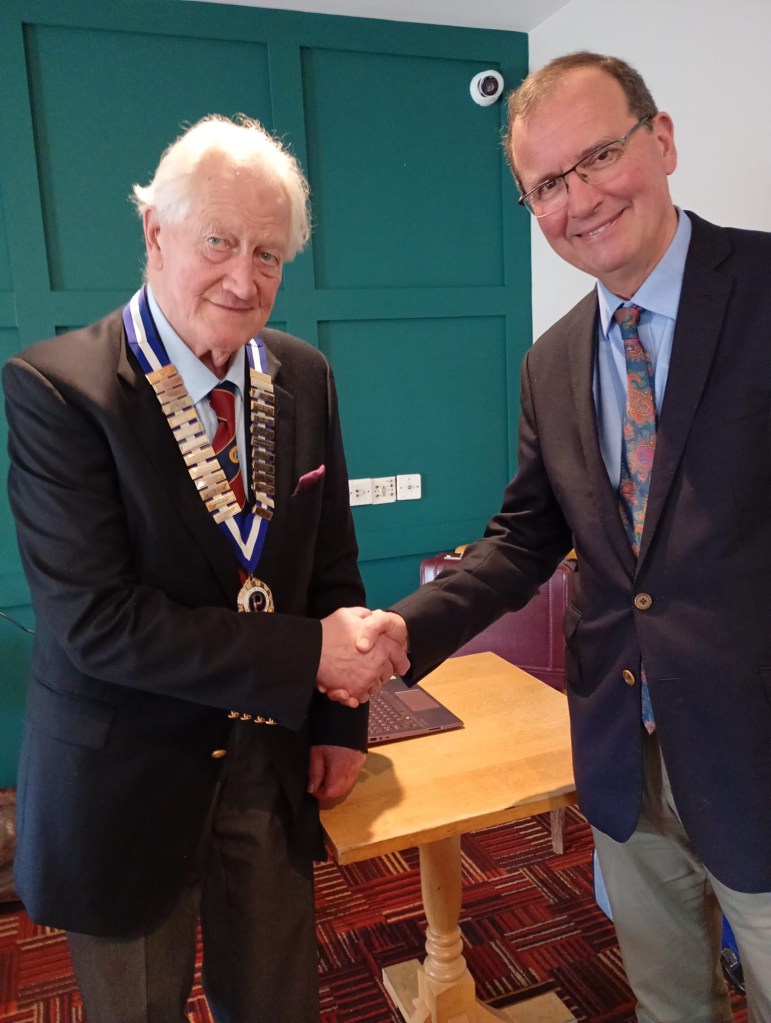
The after lunch speaker for the Probus Club of St Austell in March was Fergus Cochrane Dyet OBE whose talk was entitled ” A Diplomatic Career in Africa: Expulsion and Ebola”.
Fergus was recruited for the Diplomatic Service from university. He explained that the position of Ambassador was very different from the stereotype.
As British High Commissioner to Zambia, he met and worked with many people from all walks of life including the well-known president at the time, Kenneth Kaunda as well as businesspeople and politicians and the everyday inhabitants. However, President Kaunda severed relations with Britain due to the issues created due to the Rhodesian crisis and Fergus was expelled from Zambia.
He went on to Helmand Province and to Malawi where he often had to travel by foot, encountering dangerous wildlife, including lions, crocodiles and elephants along the way.
Moving then to Liberia, he found vast amounts of damage and deprivation with very primitive standards of hygiene. Worst of all was the spread of the deadly disease, Ebola and there was a risk of this spreading to neighbouring Sierra Leone. Fortunately, there were United States Health Centres being set up which were a great help.
Chairman Tom French thanked Fergus for an extremely interesting and informative talk. Applications for potential new club members are always welcomed, and information can be obtained by contacting Secretary John Dearing on 01726 844368 or Lunch Secretary Hugh Walker on 01726 844950
Wednesday 4th February Lunch with speaker Professor Colin Bristow
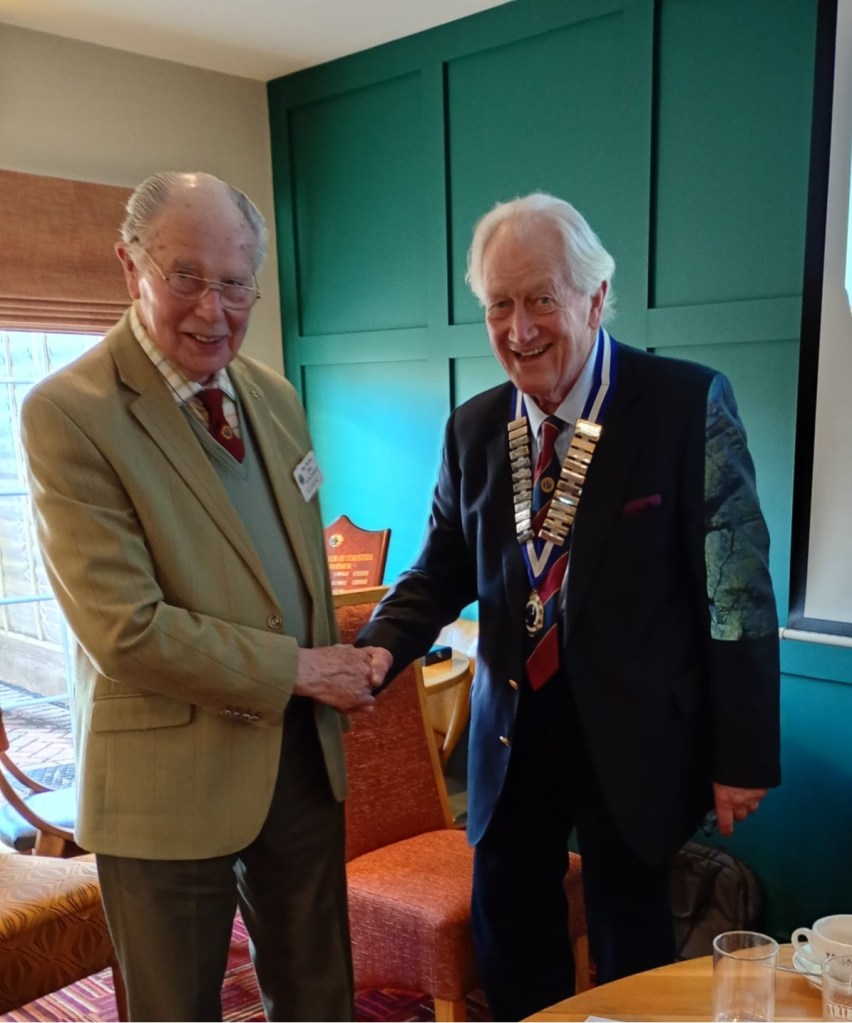
The members of the Probus Club of St Austell were entertained at the February lunch meeting by Member Professor Colin Bristow, previously Chief Geologist for ECC, now known as Imerys Minerals.
Colin’s talk was entitled “the Building Stones of Cornwall” and he explained that, from his expansive and experienced surveys and studies, that Cornwall has a rich variety of stones and minerals suited for different applications and today’s talk was about those used in building. He had made a map of Cornwall showing the different types of stone and where they were to be found. Predominant is granite with major locations shown to be Bodmin Moor, St Austell, Carnmenellis in West Cornwall plus smaller sites including Land’s End and Penryn.
Colin brought a box of different stone samples available for inspection and his talk was accompanied with photographs. One photograph showed a huge, single granite rock calculated to weigh 2,738 tons. A site near St Stephen was named Stephenstow where a low iron content granite, thus making the stone much whiter, was found and known as China stone and it was used in the construction of buildings benefitting from the lightness of colour, such as Truro Cathedral. Luxulyan granite was quarried by Joseph Treffry and amongst the uses for his stone were the Plymouth breakwater, Queen Victoria’s Osborne House on the Isle of Wight and his own stately home, Place, at Fowey.
Colin commented that many examples of stone can be seen in the varieties used in Cornish hedges. Other stones used in finishing Cornish buildings are sandstone, elvan stone such as Pentewan stone and many others including slate from Delabole. De Lank on Bodmin Moor is the only quarry still capable of providing building quality granite.
Chairman Tom French thanked Colin for his most interesting and informative talk. Prospective new members are welcome to join us at a monthly lunch meeting and should contact secretary John Dearing on 01726 844368 or lunch secretary Hugh Walker on 01726 844950
Wednesday January 7th Lunch with Speaker Keith Owen
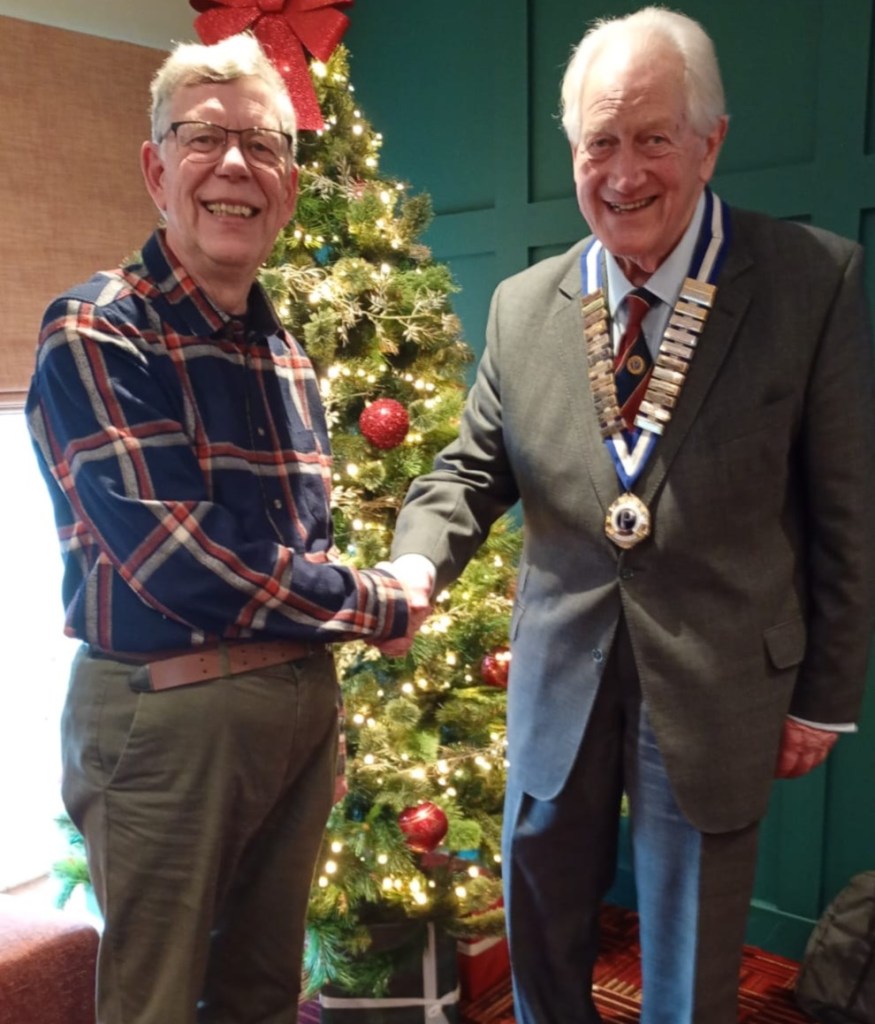
The after-lunch speaker at the Probus Club of St Austell in January 2026 was historian Keith Owen who gave a highly detailed account of how the Romans established Christianity and its origins leading to its acceptance as the primary religion in Britain.
Previously, the Romans aligned their emperors with gods and accepted the emperors’ edicts, such as that of Decius (250 – 261AD) and up to that of Theodosius, which, in 380AD was the official religion then.
St Peter went to Rome where he effectively brought Christianity but was martyred and his tomb was discovered in a cemetery there in 1962; it bore symbols identifying the tomb as his. From the introduction of the Eucharist, in the 4th century AD, wealthy people took more to prayer than ever, establishing their status visibly by the expensive robes they wore, incorporating colours which denoted their position in society. They also used gospel books and burned incense. The worshipping usually took place underground in catacombs where families would also gather for special events, like funerals.
Under Roman administration, other parts of the Empire, obviously including Britain, became Christian in their religion.
Chairman Tom French thanked Keith for his interesting and very informative talk.
Non-members who would like to join us for convivial company, a first-class lunch and an interesting talk may contact Secretary John Dearing on 01726 844368 or lunch secretary Hugh Walker on 01726 844950
Christmas Lunch on Wednesday 3rd December 2025
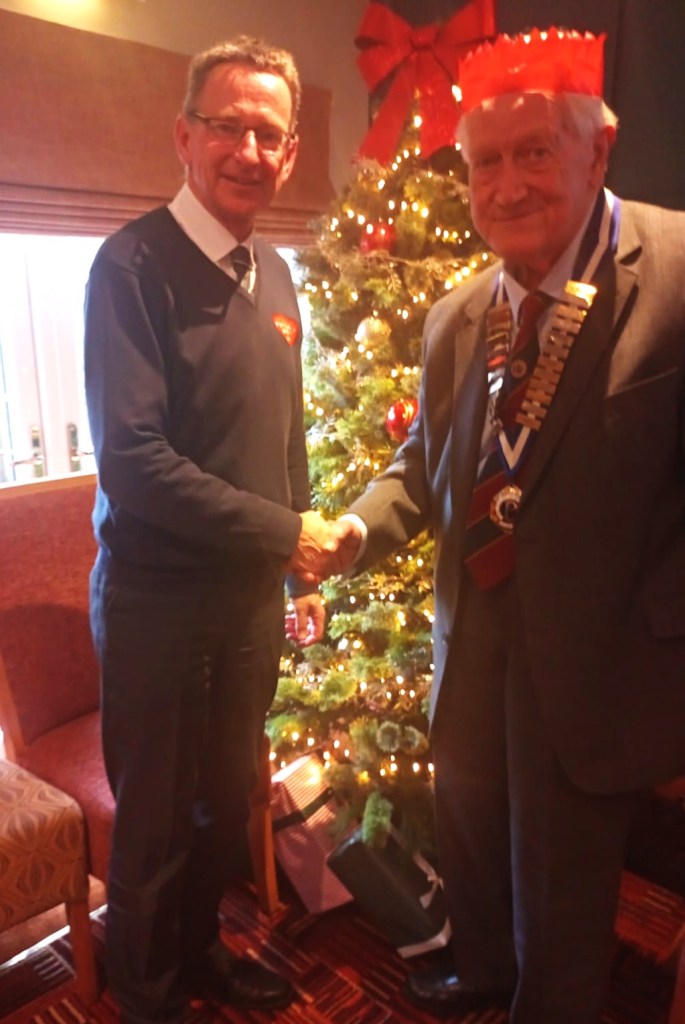
Andrew Prowse of St Austell accountants / financial advisors, Phillips & Frith, gave an informative and useful talk to the members of The Probus Club of St Austell in December. following the Chancellor’s recent Autumn budget since some financial concerns may now face many people under the present government.
Andrew explained the fields with which his Company is primarily involved in nowadays and went on to explain the issues surrounding taxation in its many forms, state pensions, now and in the future and savings in the form of cash ISAs.
Where issues of concern were raised, club members felt that it would be advisable to seek professional guidance from a reputable financial advisor.
Chairman Tom French thanked Andrew for providing members with his helpful and interesting talk.
As usual, applications for potential new members are always welcome so why not join us as a guest on the first Wednesday of the month for a great lunch followed by an interesting speaker, all in a convivial atmosphere!
For more details contact Secretary John Dearing on 01726 844368 or Lunch Secretary Hugh Walker on 01726 844950
AGM Lunch Wednesday 5th November 2025
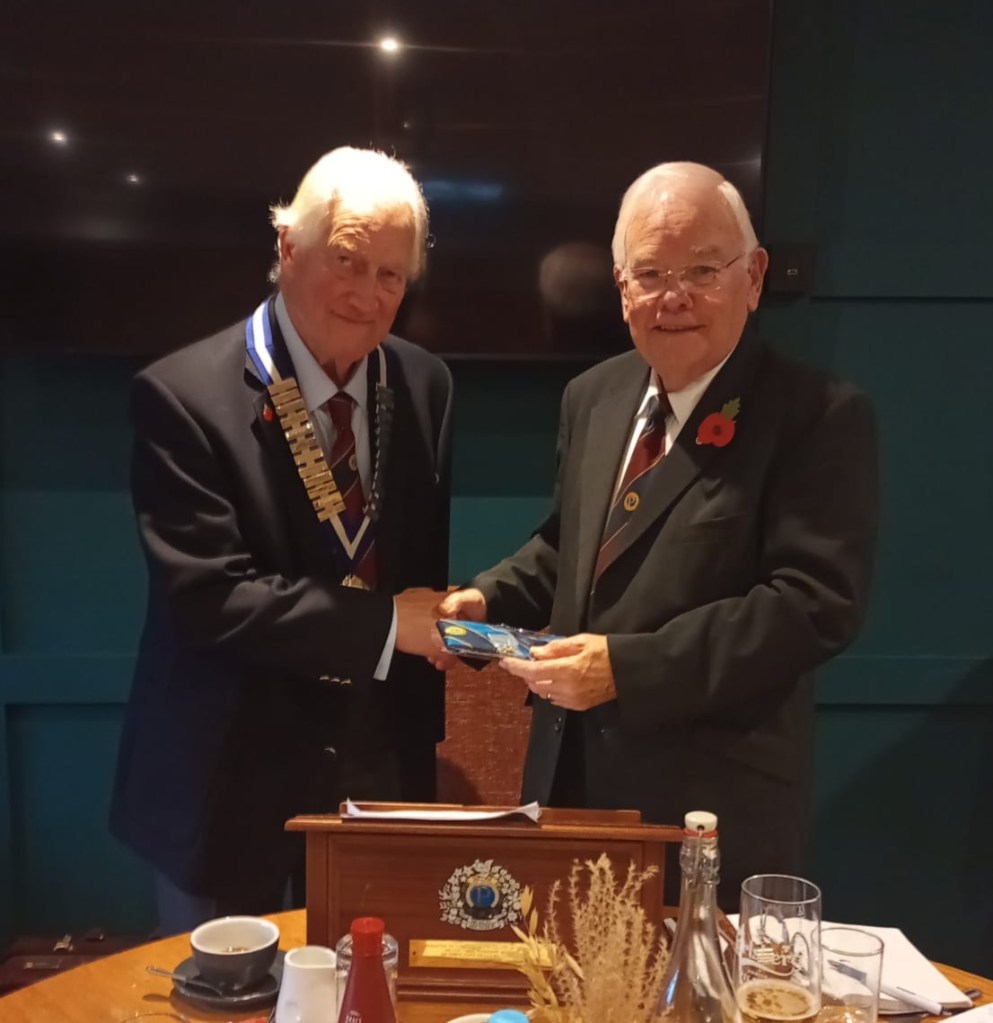
AGM Lunch Wednesday 5th November 2025
The Probus Club of St Austell held its 54th AGM at the Britannia Inn in November.
After the usual convivial lunchtime, outgoing chairman, Gary Truscott relayed to the members a brief personal history concluding with his acknowledgement of a most enjoyable time in his role as chairman. Gary will continue as the Club’s treasurer.
Secretary John Dearing led the meeting and included thanks to the committee members for their input during the year.
The meeting concluded with the installation of Tom French as the new chairman and Phil Simpson acting as vice-chairman.
The minutes of the meeting were recorded by John Dearing, and they may be read below.
New members are always welcome to apply for membership of the Probus Club of St Austell for friendly chatter, satisfying lunches and a variety of interesting speak
Minutes of the 54th Annual General Meeting – 5 November 2025 at The Britannia Inn
There were 28 members present.
Hon. Secretary John Dearing was asked by the Chairman Gary Truscott to convene the Meeting.
Apologies: Peter Bishop, David Champion, Tony Pickup, Albert Sanders, Harvey Sanders, Phil Simpson
Minutes of the 53rd AGM held 6 November 2024: Approved and accepted as a true record.
Proposed: Bob Moore, Seconded: John Oakley. Agreed unanimously, signed and dated by the Chairman. There were no matters arising.
Chairman’s Report – Gary Truscott: GT began by relating a short story concerning his own key personal values, etiquette, protocol and morals. Despite today’s changing world he has been pleased to find these values still in the forefront of matters at The Probus Club of St Austell. It had been a privilege he said to have been Club Chairman for the past two years, where we have enjoyed a plethora of good speakers and two well attended Ladies Lunches. He thanked the Committee members for their support and hard work which has maintained the high standards and continues to ensure the Club runs seamlessly. GT asked the meeting to spare a thought to those members unable to be with us today due to illness and wished them well. In conclusion he thanked all members for their loyal support over the past two years.
Hon. Secretary’s Report – John Dearing: JD began by referencing the continual diet of bad news we seem to face, contrast to which the monthly meetings of Probus. These continue to provide a welcome opportunity to put all the troubles of the world aside in like minded company over a good lunch and with our variety of excellent speakers. He stated his view that this highlighted we should do all we can to nurture and protect the future of the Club. He went on to encourage members to voice their opinions and ideas on how this might be achieved, a topic he planned to return to under any other business. JD then thanked on behalf of the members, all the Committee who had served during the past year, for their work and efforts on our behalf. He also thanked Jonathan Church our Almoner and David Lindo our Hon. Auditor for their valued contributions outside of Committee. JD then thanked the members present for their attendance and welcomed any new members to their first AGM. He concluded with his belief that the past year had been both successful and enjoyable and the wish that many more such years lie ahead.
Hon. Treasurer’s Report – Gary Truscott: GT distributed copies of the Club’s Accounts for year ending 30 September 2025, these having been inspected and approved by our Hon. Auditor David Lindo whom he thanked. The current account stands at £1836.90, down £403.62 on the previous year, with membership income down but raffle income up. He thanked Geoff Burt and George Miller for their efforts running the raffle. He advised the annual membership fee is to remain at £25 including a £5 gratuity payment to staff at The Britannia. GT then answered questions raised relating to the accounts and recommended them for adoption. JD asked for a proposal these be adopted, proposed: John Lucas, seconded: Jonathan Church. Agreed unanimously.
Membership Secretary’s Report – Mark Bardsley: MB reported that membership currently stands at 36, eight fewer than this time last year. He referred to the members lost in the past year who will be sadly missed. Referring to the demographic of our members he advised 4 are in their 90’s, 21 in their 80’s, 11 in their 70’s and 2 in their 60’s. This clearly demonstrates the need for continued recruitment. He wished those members struggling with illness a speedy recovery and return to our ranks. MB then introduced the new style Probus Club Directory which today had been distributed along with the renewal invoice.
Lunch Secretary’s Report – Hugh Walker: HW thanked the Committee and the members for their valued support and understanding over the past twelve months. He extended his thanks on behalf of the Club to the management team and staff of The Britannia Inn, who have provided excellent support and service along with a continued high standard of lunch meals. He reminded members of their option to bring a guest or two to lunch which would be most welcome. HW stated he looks forward to supporting the Probus Club of St Austell in his role in the coming year.
Election of Officers and Committee for the coming year:
The following members have agreed to stand:
Hon. Treasurer – Gary Truscott
Hon. Secretary – John Dearing
Membership Secretary – Mark Bardsley
Lunch Secretary – Hugh Walker
Press and Raffle Secretary – Geoff Burt
Non Committee roles: Jonathan Church (Almoner), David Lindo (Hon. Auditor)
Proposed en bloc: George Miller, Seconded: Peter McLellan. Agreed all in favour, duly elected.
Appointment of new Club Chairman Tom French and Vice Chairman Phil Simpson:
GT presented TF with the Club regalia and invited him to take the Chair. TF then in turn presented GT on behalf of the Club with a Past Chairman’s tie and pin badge. Phil Simpson’s appointment was confirmed in his absence.
At this point TF addressed the meeting, beginning by thanking GT for his two years as Chairman and stating how much he was looking forward to his time in the role. He then outlined the topics to be covered by the next two speakers he had engaged and encouraged members to give some thought to questions they may wish to ask.
Any Other Business:
i) GT gave a short presentation regarding our Club website, what in contained, how it could be accessed and how it was intended in future to become a prime source of information for members regarding Club matters.
ii) JD presented the draft amendments to the Club rules worked on by himself and Phil Simpson earlier this year and which had been agreed in principle at Committee. This document had been circulated to members prior to the AGM. Pointing out there had been no significant changes to the Club Rules since its formation over 50 years ago, it was felt the wording in places was no longer relevant or appropriate. He then outlined the specific areas where the rules had been amended. Calling for a show of hands to approve the amendments there where 28 in favour and nil against. Therefore having met the two thirds majority required the new rules where adopted.
iii) JD introduced the topic of “The future of The Probus Club of St Austell”. Returning to the theme of the continued fall in membership numbers and what steps might be taken to address this, he referred to the minutes of a recent Committee meeting where this matter had been discussed and quoted from a summary. This stated it was considered Probus was not alone in this predicament, with business life in general undergoing dramatic change and formality no longer perhaps having an appeal to potential new younger members. No criticism was involved but rather just a reflection of the reality of the situation in which we find ourselves. The topic was then opened for general discussion, much of which related to the question of female membership. With the amended Club Rules now stating clearly we are “non-discriminatory” and open to “individuals” the prevailing view was this door is already ajar. With several mixed opinions being aired, a vote by show of hands was called for regarding the acceptance of female members to the Club going forward. In favour 13, Against 9, Abstentions 6. It was agreed the Committee would take these views under further consideration prior to taking any action.
There being no further business the Meeting closed at 3.10pm.
Probus Lunch 1st October 2025
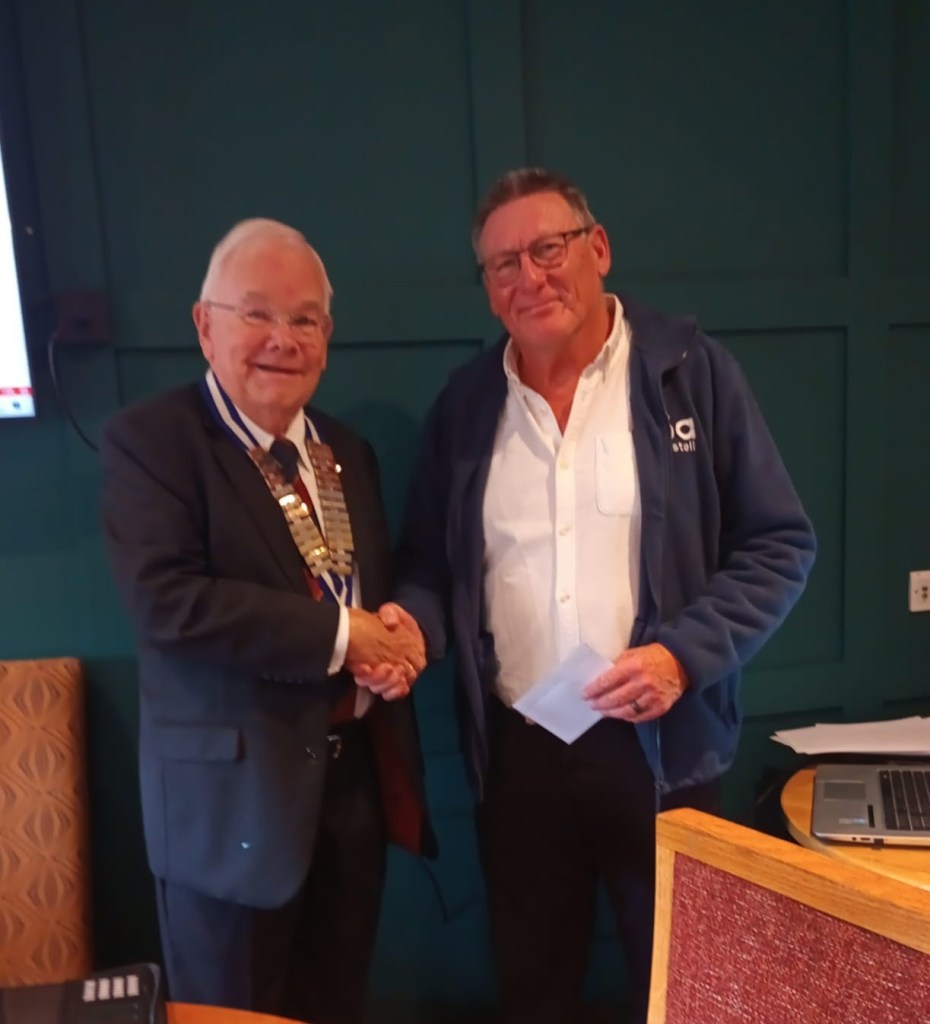
Probus Lunch 1st October 2025
The speaker at the October 2025 Probus Club of St Austell lunch meeting was Chris Crane, chairman of the St Austell branch of U3A.
After a career in management systems, Chris and his wife, who had not been well, joined the local U3A organisation in St Austell.
He described U3A as “the University of the Third Age”. It is an international movement to promote non-formal learning by self-help and has over 400,000 members in the UK, the largest of its kind and includes 450+ members at the St Austell branch.
Meetings take place at the Arts Theatre, Truro Road and offer a vast range of opportunities to join Interest Groups, from Book Clubs to Games, from Languages to Painting, from Travel to Tai Chi !
There is a Speaker Meeting monthly and a Coffee Morning, also monthly and both are included in the £20 annual fee.
Their comprehensive leaflet is available via their website : https://www.staustellu3a.org.
Probus chairman, Gary Truscott, presented Chris with a cheque for his chosen charity.
The Probus Club of St Austell warmly welcomes new members and, if you enjoy camaraderie over a very good lunch, be entertained by a speaker and try your luck with our prize raffle, why not ask for details of membership from secretary John Dearing on 01726 844368 or lunch secretary Hugh Walker on 01726 844950
Probus Ladies Lunch 3rd September 2025
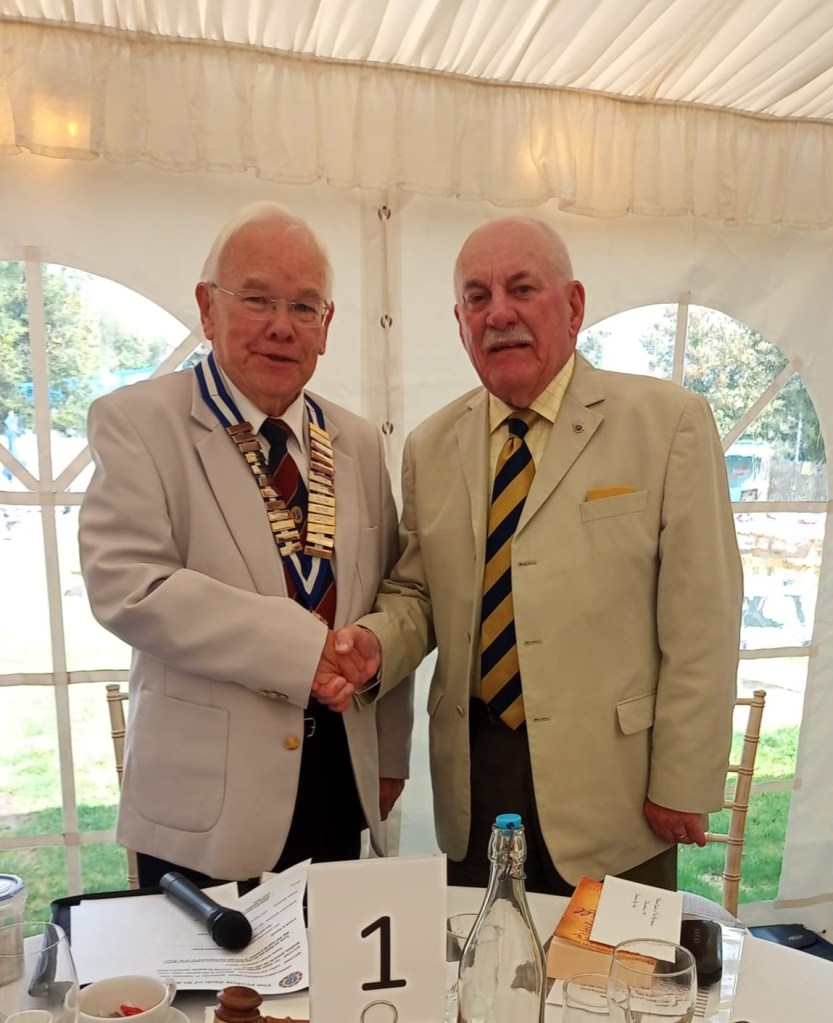
Members of the Probus Club of St Austell and their wives and guests enjoyed the September ladies’ lunch at the Britannia Inn and were given a most informative talk on nurse Edith Cavell, best known for her sterling work nursing wounded and sick soldiers during the early part of World War 1. The speaker was David Kendrick, On retirement from the Metropolitan Police David had attained the rank of Commander, equal to Assistant Chief Constable in County Police Forces. David had also given an excellent talk on Florence Nightingale at a previous lunch.
Edith Cavell was born in 1865, a vicar’s daughter living near Norwich. She had a strict Anglican upbringing and was home educated by her father and a governess before going to boarding school near Peterborough. She was a gifted linguist and pianist and her father was able to obtain a position as governess for her in rural Essex.
Following her career from there, Edith spent 5 years as governess to a lawyer’s children in Brussels, returning home as a carer when her father became ill. This led to her becoming a full-time nurse and, at age 30, was dealing with all kinds of diseases at a London fever hospital, then moving to St Pancras Infirmary, working 22 hours a day and thence to Shoreditch Infirmary as Assistant Matron. In 1906 she went again to Brussels to work for an eminent surgeon who needed an experienced nurse who was fluent in languages. Her main task was to train new nurses for positions in nursing homes and surgical units.
As the Great War progressed, wounded soldiers were brought back to neutral Holland for treatment and, hopefully, recovery. When the German enemy found out this was happening, they arrested Edith, accusing her of war treason, by virtue of helping allied soldiers recover so that they could return to fight the Germans again. She was kept in solitary for 3 months before a military tribunal condemned her to death by firing squad which was carried out in October 1915.
Edith, 49, was the first commoner to be given a state funeral and she is buried at Norwich cathedral with a memorial just off Trafalgar Square.
The Club always welcomes enquiries from prospective new members so why not give it a try? Phone secretary John Dearing on01726 844368 or lunch secretary Hugh Walker on 01726 844950
Probus Lunch 6th August 2025
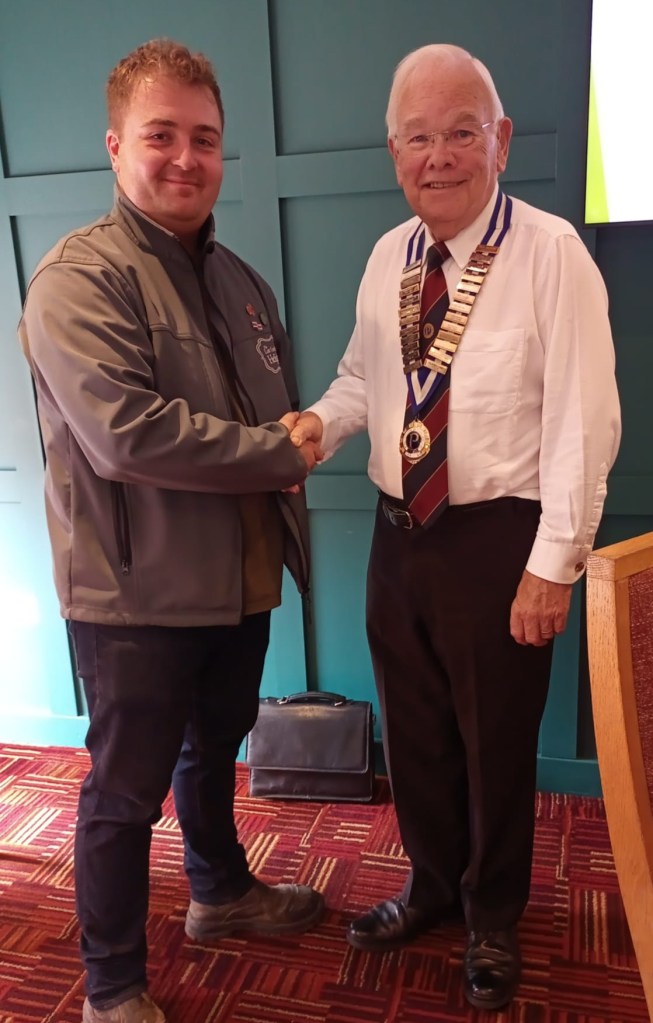
The speaker for the Probus Club of St Austell August lunch was Toby Davis, Wildlife Co-ordinator at The Lost Gardens of Heligan. Toby’s roots are here as his great grandfather, Charles Ball, was roadman at the estate, making and maintaining roads and paths. Sadly, he was killed in action in WW1 and was buried in a military cemetery in France.
Heligan is one of the Three Bays Wildlife Group, covering wildlife aspects of St Austell, Mevagissey and Veryan Bays.
Toby’s extensive job description covers the administration and implementation of creation, maintaining, monitoring and recording of wildlife features at Heligan and organising volunteer groups for special requirements.
Some specific events include the installation of beavers in a safe enclosure area where they have built their own lodges and dams. the original two beavers now have two kits of their own. it is anticipated that the dams will reduce the risk of flooding in Mevagissey in times of heavy storm water.
Also introduced into The Lost Valley are water voles. Initially, 40 were brought in with more expected plus some pups born recently. The insect center, “Buggingham Palace” has seen glow worms being produced with plans to be able to release more soon.
There is a hedgehog rescue centre to care for and rehabilitate hedgehogs in need; 50 bat boxes are in place to record and study differing bat species; barn owls also are monitored via cameras in their nesting boxes, and two chicks have hatched this year.
Toby has volunteer groups surveying butterflies, bees, fungi and wildflowers at various times throughout the year.
A new enclosure is being installed to cater for red squirrels, and it is planned to encourage these to become established and prosper.
Probus Lunch 4th Jun 2025
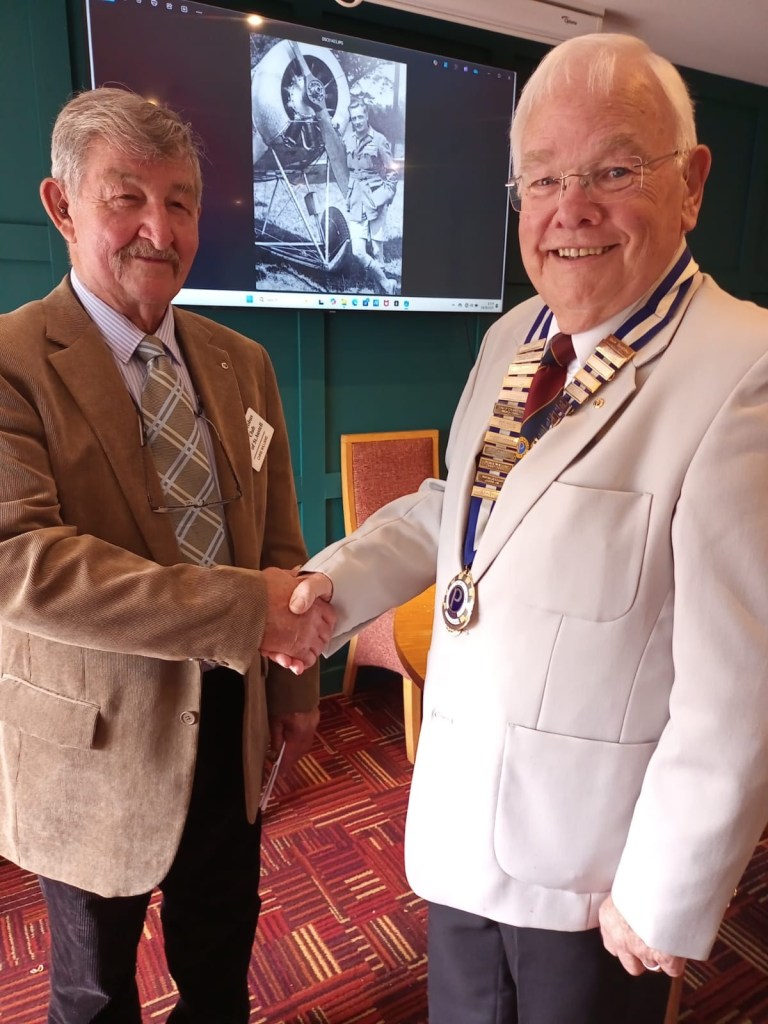
Members of the Probus Club of St Austell enjoyed a combined talk and film show after their first-class lunch at the Britannia Inn at the June meeting.
Member Chris Williams, who is an avid local historian, gave a talk on the Cornwall Aviation Company and its founder, Captain Percival Phillips DFC, whilst Membership Secretary Mark Bardsley showed a film from the 1920s showing the aeronautical displays made by Captain Phillips and his team at that time.
Sight-seeing and joy-riding flights were on offer, taking place at Rocky Park, once a popular venue on the edge of St Austell near St Mewan. The same opportunities to experience flights to the general public were available throughout the country as Captain Phillips took the Cornwall Aviation Company far and wide.
Capt Phillips was an experienced mechanic and joined in the DCLI in 1914, as a mechanic before being transferred to the newly formed RFC as aircraft engineer. He then took to the air as a gunner before being chosen as a pilot by Major de Havilland.
He saw plenty of wartime action, having been shot down and won the DFC for heroic action attacking enemy Kurds emplaced in a ravine in Mesopotamia.
In 1922 he returned to St Austell, got married and set up Hill & Phillips motor garage with a partner and in 1924 resumed the popular pleasure flights from Rocky Park and, again, throughout the country. The CAC owned 8 Avro 504 versatile and reliable. aircraft.
Capt Phillips also joined Sir Alan Cobham’s Flying Circus travelling widely and giving thrilling flying displays plus aerial acrobats, stuntmen doing wing-walking and other dangerous tricks,
After a job involving towing aerial adverts in Cambridgeshire, the Captain visited friends near where he was working but on his return trip to home, he encountered very bad weather bringing his airplane down in woods where it crashed into trees and he was killed instantly. His motor garage continued for many more years under new ownerships.
Chairman Gary Truscott presented Chris with a donation for a charity of his choice.If you would like to join our convivial club, why not have a chat with Secretary John Dearing on 01726844368 or Lunch Secretary
Hugh Walker on 01726844950
Probus Lunch 2nd April 2025

After a first-class lunch at the Britannia Inn, the members of St Austell Probus Club were given a very informative and interesting talk by Peter Bradbury of Cornwall Air Ambulance.
Cornwall’s was the first Air Ambulance in the country, being established in 1987. The origins of the service were to quickly transport casualties from where they were to hospital but nowadays, the “hospital” travels to the patient. State of the art equipment is fitted to the helicopter including night vision glasses, CPR machine to take the place of physically demanding CPR by humans, blood transfusions and high-tech radio communications systems.
The personnel employed are 12 Critical Care Paramedics, advanced Paramedics who deal with much more serious cases than regular Paramedics and are authorised to, such as, administering the likes of ketamine where necessary. There are 6 pilots plus 7 doctors who sometimes fly but not on every call. Also, a very necessary body of 318 groundcrew and 57 charity workers make up the numbers.
In excess of 1000 missions are flown each year and the Air Ambulance has become vital to Cornwall reaching casualties who may be in inaccessible locations making land-based rescue difficult and time consuming. The helicopter can do back-to-back operations because of its large fuel capacity and its speed can take it, for example, from Penzance to Plymouth in 20 minutes. The current helicopter cost £5 million in 2020 and a second aircraft, Heli2 is due to be added now.
Volunteers for groundcrew and fund raising are always needed and welcomed since no Government funding is provided.
Chairman Gary Truscott thanked Peter for his talk and presented him with a donation for the Cornwall Air Ambulance.
if you are still tempted to join the Club why not have a chat with Secretary John Dearing on 01726 844368 or Hugh Walker on 01726 844950 or visit our web site.
Probus Ladies Lunch 2 April 2025
An excellent Ladies Lunch Day was enjoyed by the members of the St Austell Probus Club and their wives, partners and friends on April 2nd. The event was held in the marquee at the Britannia Inn in what felt like an undoubtably summery atmosphere.
Our lunch speaker was Bethany Rudge, based at Little Harbour Hospice, representing Children’s Hospice Southwest. She gave a run-down of the history of CHSW and its current status. In 1991, Mr Eddie Farwell and his wife Jill (both now sadly deceased) had occasion to realise that the only hospice available to children of the south-west was in Oxford and set about establishing more local facilities. The first hospice they opened was at Little Bridge House, near Barnstaple; the second was Charlton Farm near Bristol in 2007 and in 2011, Little Harbour at Porthpean, St Austell was opened to cater for children and their families from Cornwall and Plymouth.
Sick children are given meticulous nursing and medical treatment and both they and their families are given the best care and emotional support. Dedicated sibling support teams are in place to help with care and understanding especially for young close relatives.
The hydrotherapy pool offers welcome relief for many suffering pain.
Music therapy is popular with the children who often become proficient playing the instruments.
Fund raising is welcomed, of course, as each hospice costs around £3.9 million per year to run.
Visitors are welcomed to the hospices to see how they are run and see the great measures of care that are in place. Appointments should be made to arrange these visits.
Our Chairman Gary Truscott thanked Bethany for her talk and gave her the club donation for the hospice. Also, Gary gave her an extra donation from last month’s speaker, Jeremy Soper, kindly given from his talk, Event Mobility.
If you still haven’t made the decision to join us, why not come as a visitor to see for yourself and enjoy a great lunch and convivial atmosphere. Contact secretary John Dearing on 01726 844368 or lunch secretary 01726 844950
Probus Lunch Wednesday 8th January 2025

The Speaker for the Probus Club of St Austell for January was Tony Smith pictured here with the Probus Chairman Gary Truscott
Tony gave a most informative talk on the work of the Commonwealth War Graves Commission, administered by Australia, Canada, India, New Zealand, South Africa and United Kingdom with the UK making the largest contribution.
War Graves origins were in 1815 following the battle of Waterloo when looting took place from soldiers killed in battle, not only of possessions but also teeth because of the demand for false teeth in an era when many people’s own teeth were bad.
Mass graves had been used traditionally for war victims but during WW1, maintained cemeteries were created and Sir Fabian Ware created a recording system for individuals buried including all ranks, not only the officers as was previously the case.
Early grave markers were a wooden inscribed cross before being replaced by white Portland headstones with which we are familiar, of uniform design but with national or regimental badge or emblem at the top followed, where known, by the individual’s registration number, rank, name, service and religion.
The famous Menin Gate Memorial Bridge at Ypres was originally designed to allow for 65,000 names but this proved insufficient, and an extension was created to facilitate another 50,000 names. Locally, St Austell cemeteries have 31 Commonwealth Headstones for those who died in the two world wars and 7 in air raids.
The WW1 war graves date from 04/08/1914 to 31/08/1921 and WW2 from 03/09/1939 to 31/12/1947, the completion dates being longer than the wars due to the length of time it took all the peace treaties to be signed.
The CWGC has 1.7 million headstones on its lists, and they maintain 1,1 million of these. They employ 850 gardeners and 160 craftsmen, and the cemeteries are managed on Environmentally Sustainable Horticulture Standards.
Their website, WarGravesFoundation gives much detailed information including volunteering and opportunities to partake in events, especially historic. “For Evermore” is the site where personal memories and histories are stored.
If you are not yet a member of the Probus Club of St Austell, but enjoy a first class lunch and like to be entertained by a wide variety of speakers, call Secretary John Dearing on 01726 844368 or Lunch Secretary Hugh Walker on 01726 844950
Probus Lunch 4th September 2024
Probus Lunch 4th September 2024
Our speaker this month was Clive Benney, historian who retired from the Police Force after 30 year’s service. He has been collecting photos and postcards primarily of St Agnes Parish and written 15 books on the area and given hundreds of talks.
He was made a Cornish Bard in 1996 for his extensive work in local history. He is a Recorder for the St Agnes Old Cornwall Society and vice-chairman of the museum.
Clive`s talk was thorough and informative, largely giving an insight into policing in his great-grandfather, Richard, known as “Policeman Benney’s day. The family moved from their traditional home in St Agnes to Carn Brea mine at Tuckingmill seeking mining jobs. However, Richard chose to join the police in 1891 and was first stationed at St Austell, then Lostwithiel and Highertown near Truro. Truro was an independent force merging into Cornwall Police in 1921.
In the early days of policing, constables had no uniforms but carried a long engraved wooden staff which could also be used as a truncheon if necessary. Communications were primitive and a “points system” was used. This meant the point of departure to the point of arrival elsewhere had to be at precise times.
Policeman Benney recorded many incidents during his career, including fighting and killing amongst navvies, recently arrived due to the growth of railways and the mining industry; also several noteworthy events such as the murder of a baby and the collection and storage of drowned seamen from a shipwreck. He retired and became a cobbler, passing away at the age of 65.
Clive was educated at Truro school where he excelled at athletics and rugby and then became a police cadet in 1971. From then, his first posting was at Plymouth, then back to Camborne where he also covered St Agnes and Perranporth. His last 11 years saw him as a sergeant with Camborne Traffic Division, covering many local miles in patrol car Ford Granada’s and finally, the extremely powerful Sierra Cosworth.
Chairman Gary Truscott thanked Clive for his very entertaining talk and presented him with a cheque for his preferred charity.
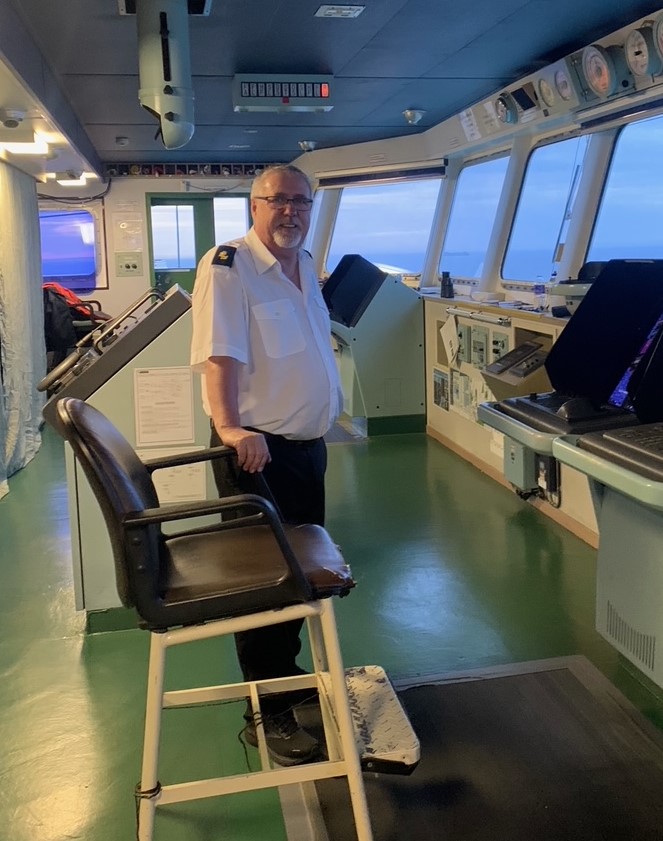
Probus Lunch 5th June 2014
The monthly meeting of The Probus Club of St Austell took place on Wednesday 5 June at The Britannia Inn, Par. Following an excellent meal the members were entertained by an absorbing presentation given by former Merchant Captain Martin Green.
Capt. Green is currently engaged as one of only 15 authorised Deep Sea Pilots operating out of the UK. The role involves piloting some of the largest ocean going vessels through many of the world’s increasingly busy sea lanes. He said his main area of operation is the North Sea and the waters of Western Europe from Arctic Norway down to Southern Spain, including the Straits of Dover. Explaining the origins of this work arising from the requirement to negotiate mine fields laid during WWII, he spoke of how it has evolved into the complex task of navigating oil platforms, the expanding number of wind farms, shallow waters occasioned by the deep drafts of larger vessels in addition to other shipping traffic, ferries, fishing boats and the odd cross channel swimmer!
He explained that with the larger container ships having the deck size of four football pitches end on end, manoeuvrability is limited, travelling at speed it can take over four miles to bring them to a stop. Planning with the aid of sophisticated computerized charts and continuous communications being vital.
The job is not for the faint hearted, to board and depart these vessels at sea involves the scaling of rope ladders which can be up to 9m high, this together with the great responsibility for ensuring the safe and vital passage of these giants of the sea. After answering numerous questions from the members Capt. Green was presented with a cheque on behalf of the Club for his chosen charity by Chairman Gary Truscott.
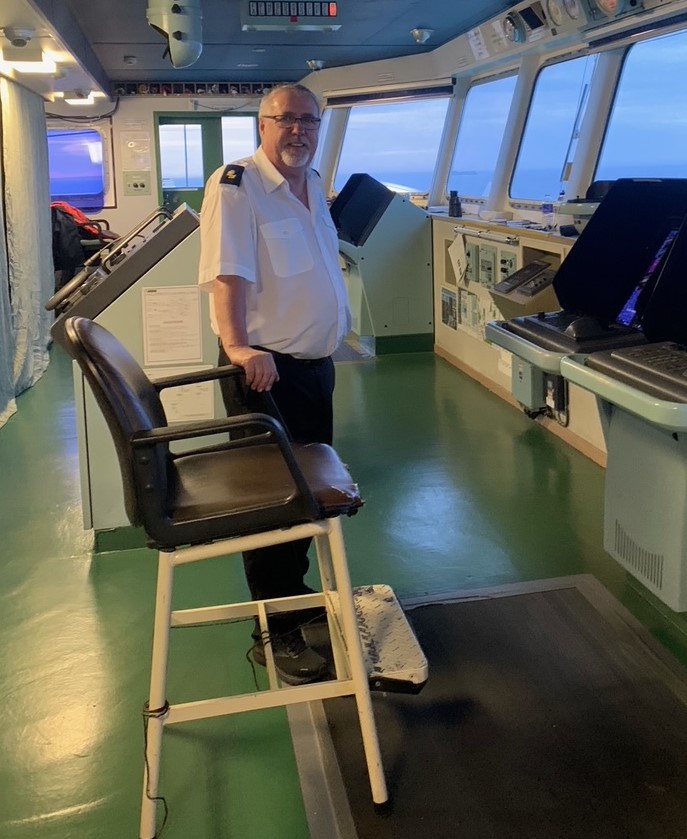
Captain Martin Green on the Bridge of Lavender Ace
Probus is a Club for retired professionals and businessmen from St Austell and the surrounding area, for details on joining visit the website http://www.staustellprobus.org
Probus Lunch 1st May 2024
The guest speaker at the Probus Club of St Austell was Evette Hall, the Port Welfare Officer of the Fowey Mission to Seafarers .
The movement traces its roots to the mid 1850’s but the work at Fowey dates back to 1920 when it was opened by Lady Mary Trefusis and the Bishop of Truro. The centre provides a bar and rest facilities, a chapel and bathroom facilities. Their present base at Fowey Docks dates back to 2011.
Most crews nowadays come from developing nations. This means that they speak a variety of languages and not necessarily English as a second tongue. Where crews are in port for more than a day or two, additional services are offered including wi fi access for messaging home and outings to local places of interest and local shops. It is not only the cargo crews who receive support but also crews from liners that visit Fowey -a particular concern is female staff who often receives unwanted attention.
Although the Missions to Seafarers are part of the countrywide and international movement, it is self-funding. The unit is open for a week once a year for an art exhibition of which sales is a major money raiser but it also receives support from local churches.

Probus Club Ladies Lunch 3 April 2024
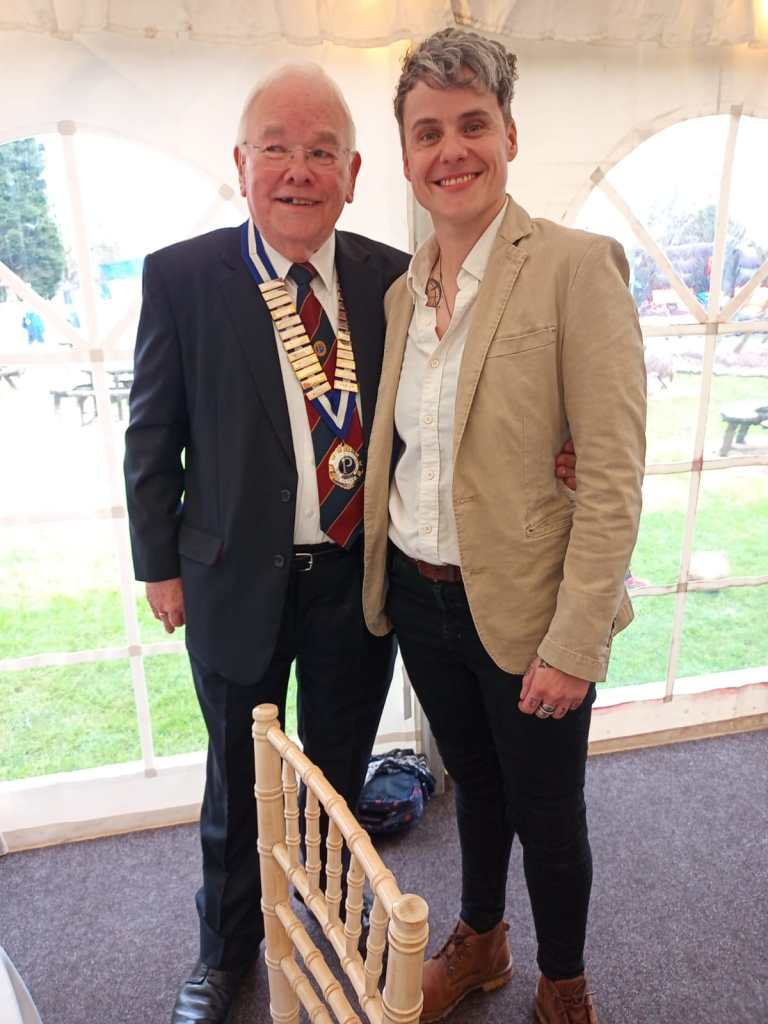
The Probus Club of St Austell was pleased to welcome Executive Chef Nat Tallent as guest speaker at the Ladies ‘lunch on Wednesday 3rd April.
Nat has been a chef for 16 years and volunteered the information that her love of cooking was most definitely not because her mum was a good cook – she wasn`t !
When she decided to become a chef as her career, she started at the very bottom of the ladder and over 3 years, rising to head chef. She also reached the quarterfinals of MasterChef on television.
In 2020, in the early days of the Covid pandemic, she helped raise £34,000 to provide meals for 10,000 people. Then moving more westerly into Cornwall, she was employed at Lewinnick Lodge and Heligan Gardens before becoming a restaurateur in Newquay.
As well as working from her own base, Nat is willing to provide catering for clients at their own venues. After this lively, informative, and entertaining talk, chairman Gary Truscott presented Nat with a donation towards her chosen charity.
Wednesday 6th February 2024
Following the March lunch meeting of The Probus Club of St Austell at The Britannia Inn, Par, members were entertained by their guest speaker Commander Tim Green RNR (Rtd). He spoke of his “Life in Submarines”. During a long career as a submariner, he had served in a variety of submarines from diesel up to finally as the Commander of a Vanguard Class nuclear powered submarine.
Tim began with an overview of the submarine, essentially a metal tube with a pressurized hull with the main elements of propulsion, steerage and weapons. The Vanguard Class provide the UK with a continuous at sea nuclear deterrent, armed with Trident missiles and Spearfish torpedoes. Their key role is to provide intelligence, anti ship capability and Special Forces delivery. The aim is covertness and flexibility with a tour of duty lasting three months or longer remaining dived for extended periods.
The operational base for all the UK’s fleet of submarines is at Faslane on Scotland’s west coast whilst the refit facility is at Babcock’s in Devonport. He explained how sonar with the addition of a towed array provides a 360 degree listening field and how new developments in AI have significantly improved operational performance.
Describing the internal layout aboard a 16,000 ton Vanguard Class submarine, despite its impressive size, with a crew of 135 conditions are still cramped. Working in shifts, six hours on and six hours off and with a ”hot bunking” system in operation, personal space is very limited. Time is set by the meals Breakfast, Lunch and Dinner with regular food selections on set days helping to regulate the crews time clocks. In Tim’s view the Chefs therefore play a vital role in any long deployment. The extended time away with very little contact can also be difficult for the families of the crew. Each may send a weekly “Familygram” of no more than 40 words, these are vetted and must contain no bad news. Tim described some of the creative, amusing and coded ways adopted to get messages through. The well received presentation ended with questions from the floor.
Wednesday 7th February 2024
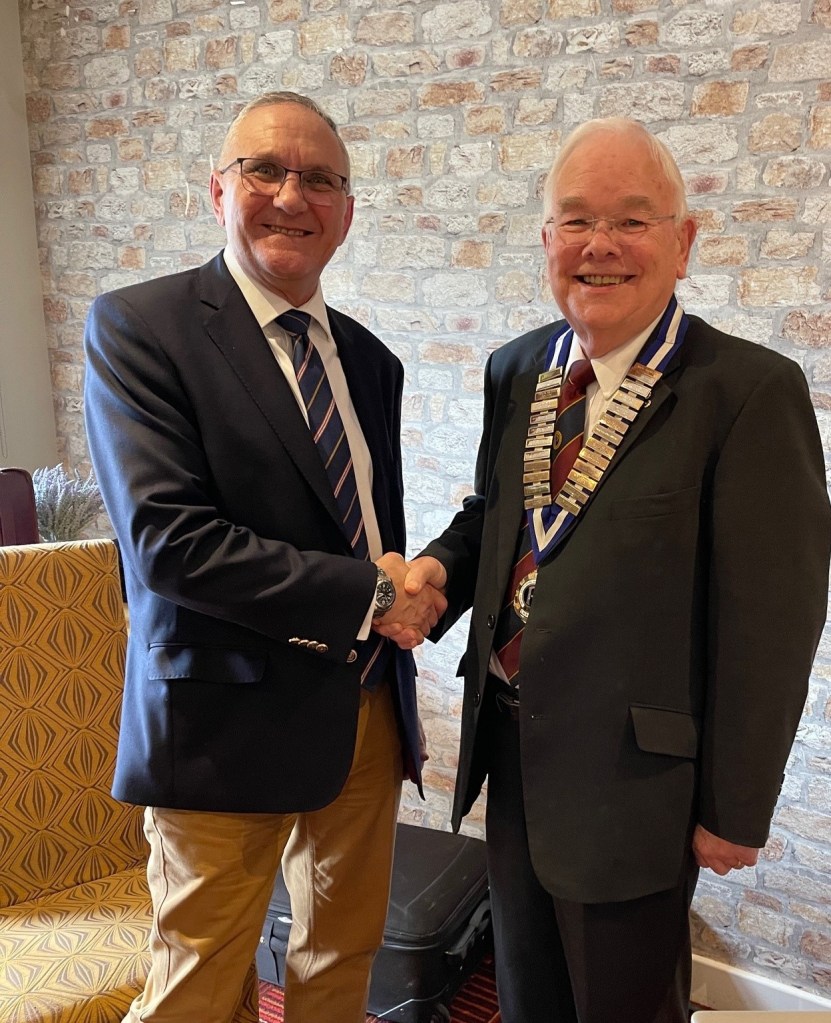
The Probus Club of St Austell met on 7th February 2024 at The Britannia Inn for its monthly lunchtime meeting. After a most excellent luncheon, Andy Trudgian gave an enlightening talk about how Charlestown has developed over the years. Andy is locally born, previously worked in the clay industry and is now President of the Charlestown History Group.
Originally known as Porthmuer (large landing/cove), it was first mentioned in the 1300’s but wasn’t until the 1800’s that suddenly gained more significance. There were 9 residents in 1790, but 300 just 10 years later. The harbour was built by Charles Rashleigh at this time to facilitate copper shipment.
Charles Rashleigh funded the building of the port, foreseeing the impending mineral boom locally. It also facilitated the importation of coal, needed to fuel steam pumping engines newly acquired for the mines.
Rashleigh however was swindled out of his wealth and he died broken and bankrupt in 1823. Charlestown Harbour was taken over by the lawyers handling his estate, who created the Charlestown Estate which preserved the enterprise. Copper mining declined but the port remained busy with clay shipments until the early 1900’s – however it ultimately declined owing to its tricky entrance, which meant that shipments slowly transferred to Par and Fowey, where larger ships could be handled.
More recently, Charlestown Estate was wound up in 1985 and the harbour/properties sold off. Clay shipments finally ended in 1999. Shortly thereafter, the association with tall ships started, along with the harbour being regularly used by the film industry. However with the growing use of digital technology, location filming has become less frequent so Charlestown is becoming increasingly dependent on the tourist industry for its prosperity.
Designated a World Heritage Asset, Charlestown remains the best preserved China Clay and Copper port in the world.
The Probus Club of St Austell is a luncheon club open to all local retired professionals and businessmen. Members come from across clay country and the Mevagissey area, meeting on the first Wednesday of each month. Please contact membership secretary Mark Bardsley on 01726 68726, or secretary John Dearing on 01726 844368 for further information. http://www.staustellprobus.co.uk
Andy Trudgian with Gary Truscott, Chairman of The Probus Club of St Austell.
Wednesday 6th December 2023
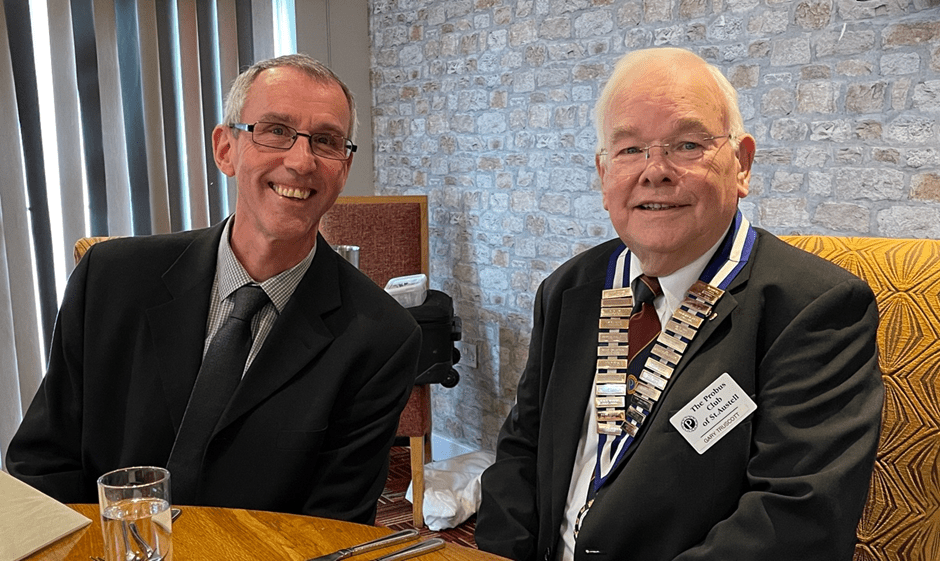
After our superb lunch we received a talk by Alisdair Moore who has been the Head of Gardens and Estates at Heligan for last five years.
Heligan is approx 200 acres of gardens, farm and estate, with three elements of gardens: kitchen, ornamental and jungle and welcomes some 350,000 visitors a year, compared to none when it was lost prior to 1991.
The original gardens were built up by the Tremayne family and the ornamental gardens were established in the 1780’s, using camellias and rhododendrons brought into the UK as a consequence of the tea trade with the far east. Subsequent generations of the family continued to develop the gardens until WW1, when the traditional country estate was abandoned owing to a lack of gardeners who had all gone off to war.
The abandoned gardens were bought by Tim Smit after he got to know the gardens as an archaeologist, rediscovering them. The human story of the garden emerged from the remains, all the different roles and activities needed to support such a large estate. Of the 14 gardeners who were employed in August 1914, all went to war, only four survived but none went back to work at Heligan…
Recent work at Heligan is, amongst other activities, focused on the nutritional value of food. Since the 1950’s the nutritional value of our foods has dropped owing to the changing methods of commercial horticulture: more modern varieties having focused more on appearance, productivity and shelf-life as a priority. Heligan are now focusing on ancient varieties of fruit and vegetable with a view to restoring the nutritional value of our foods. Think Cox’s apples rather than pink lady. Heligan’s work with apples, tomato’s and heritage grains are already generating wider interest.
Rare breeds of animal are also being used as a part of reviving farming methods, and they are discovering that keystone animals and plants can be re-introduced into the farming environment to create a thriving ecosystem and more fertile arable land. Allowing animals to graze only a part of the land then move them on to another plot creates a better wildlife habitat, fewer parasites, better plant growth and healthier animals. It builds up soil fertility and re-invigorates the nutritional value of the crops.
Beavers are also becoming important to Heligan, their re-introduction will help manage flooding, erosion and creating new wetland habitat that really helps with biodiversity. A pair of beavers were introduced earlier this year and quickly started to build a series of dams, five so far and are having a profound impact on the environment already.
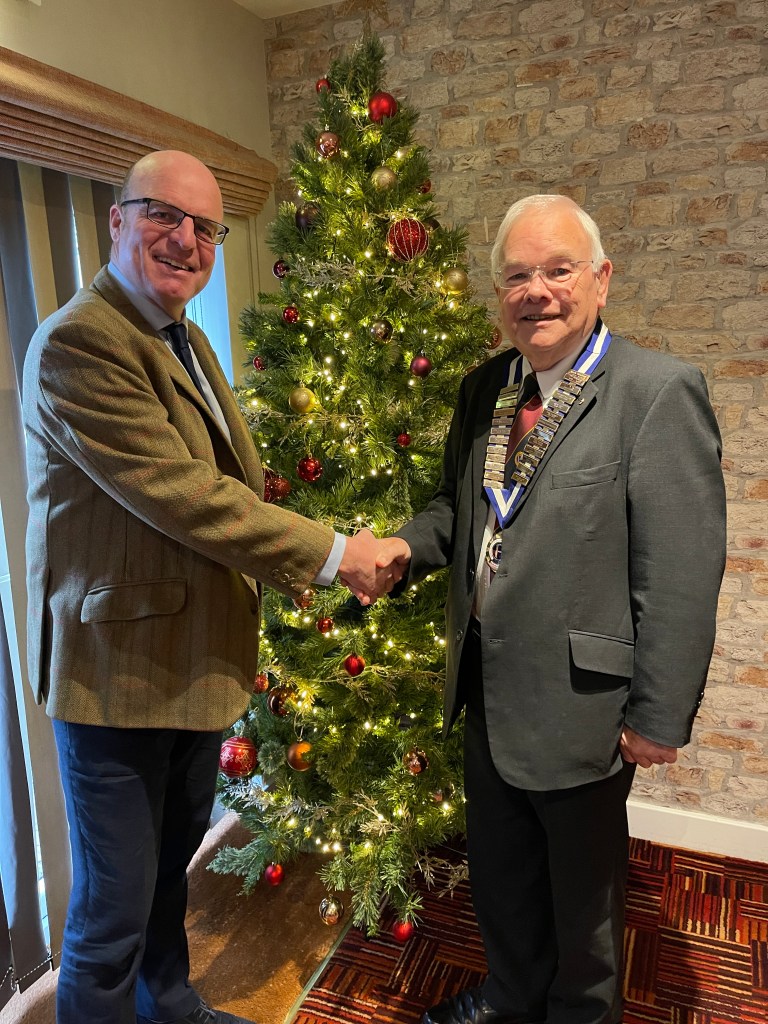
Wednesday 1st November 2023
The Probus Club of St Austell held its 52nd Annual General Meeting at The Britannia Inn on 1st November 2023.
After approving the minutes of the 51st Annual General Meeting, officers presented their reports. Whilst membership had fallen a little, currently 46, the financial position remained generally healthy. The hosting provided by The Britannia Inn continued to excel and speakers had covered a wide range of interesting topics.
The outgoing Chairman, who had served an extended spell as a result of Covid and other issues, thanked his Committee for its stalwart support and he stressed the urgent need for new blood.
It was reported that Gary Truscott is appointed Chairman in addition to remaining as Treasurer with Phil Simpson serving as his Vice Chairman. Other officers appointed by the meeting were Hon. Treasurer Gary Truscott, Hon. Secretary John Dearing, Lunch Secretary Hugh Walker, Membership Secretary Mark Bardsley, Raffle Geoff Burt with George Miller and Press Secretary Mike Hackney. Jonathan Church remains as Almoner off-committee.
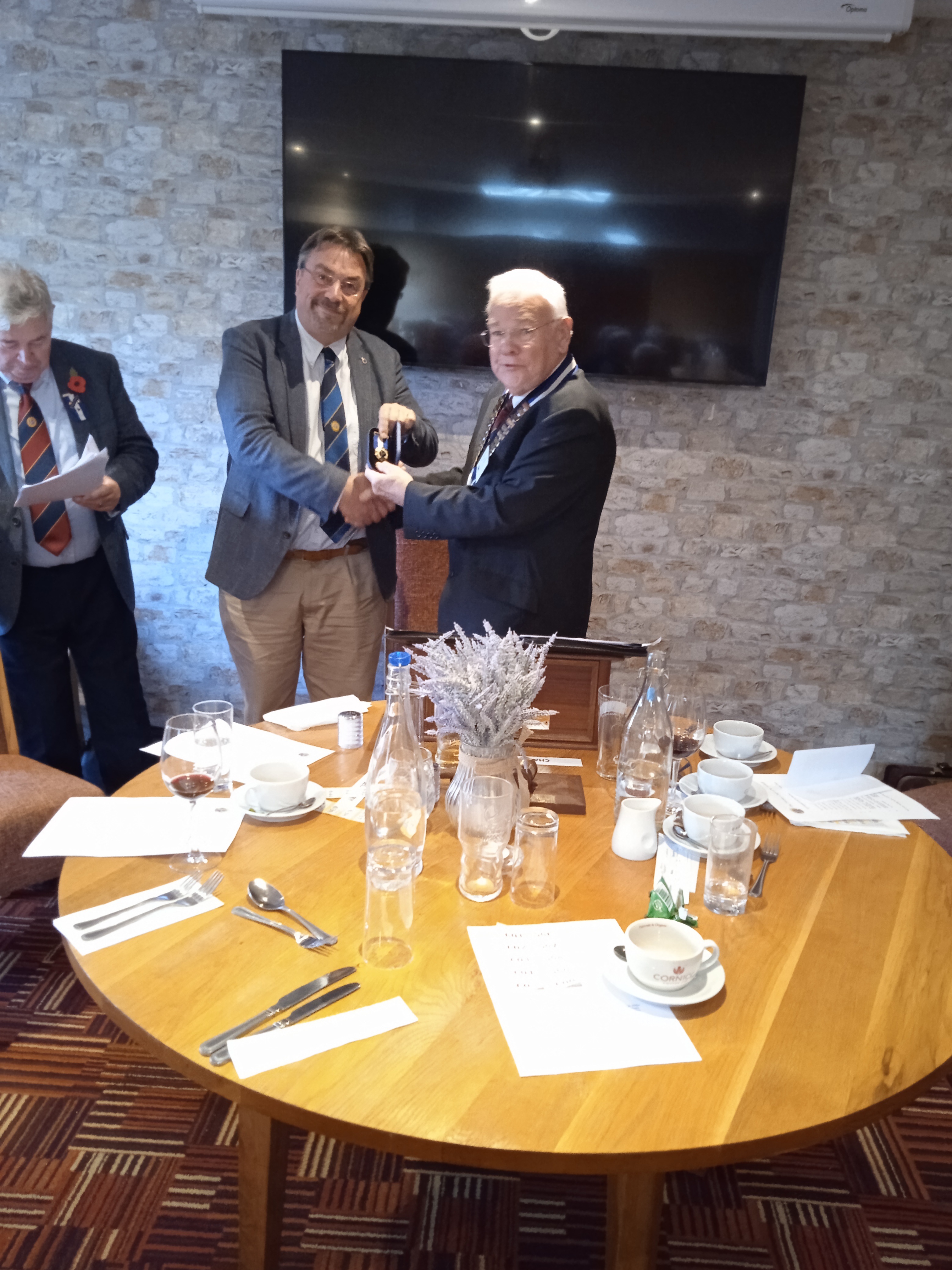
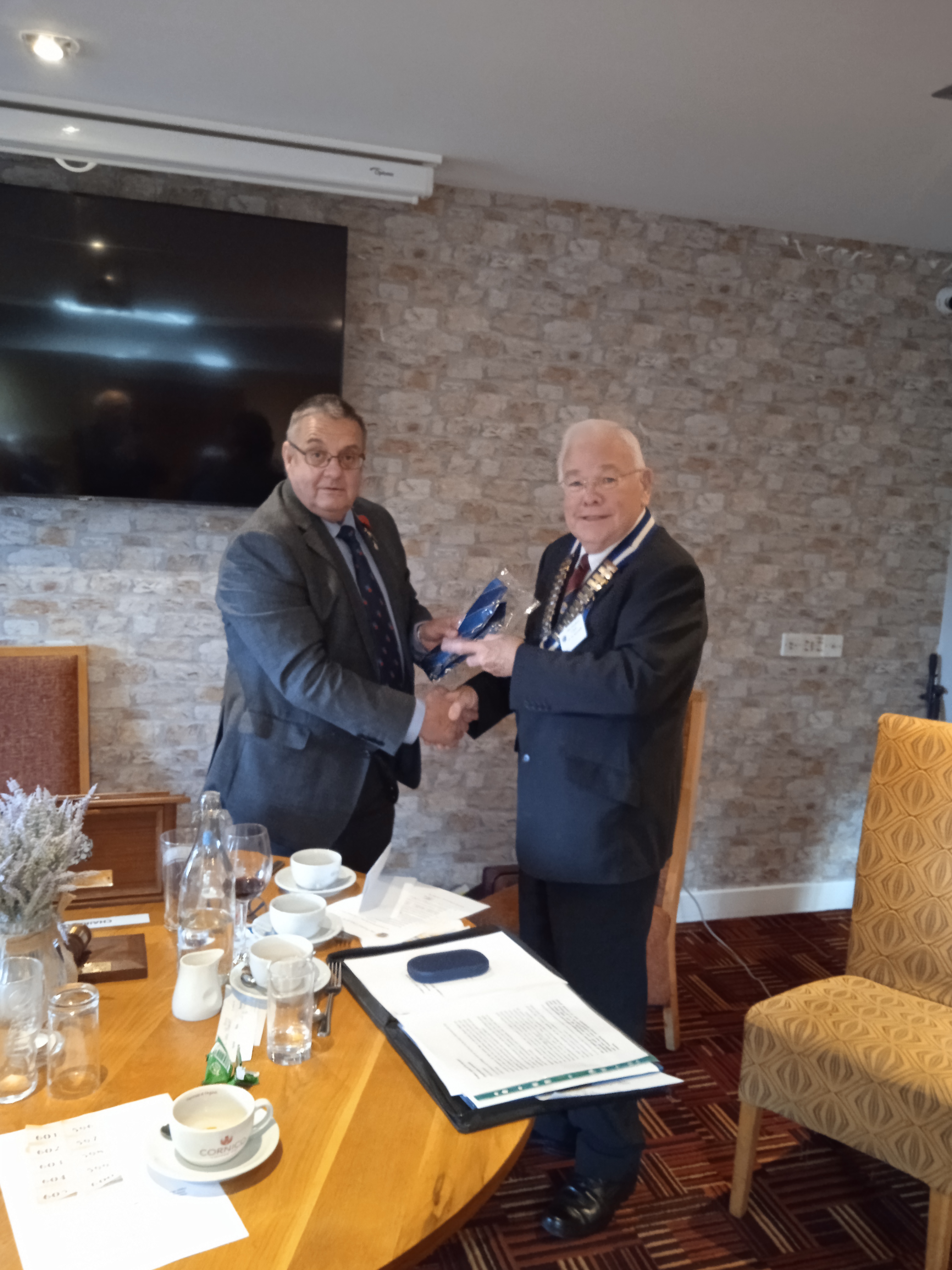
Wednesday 4th October 2023
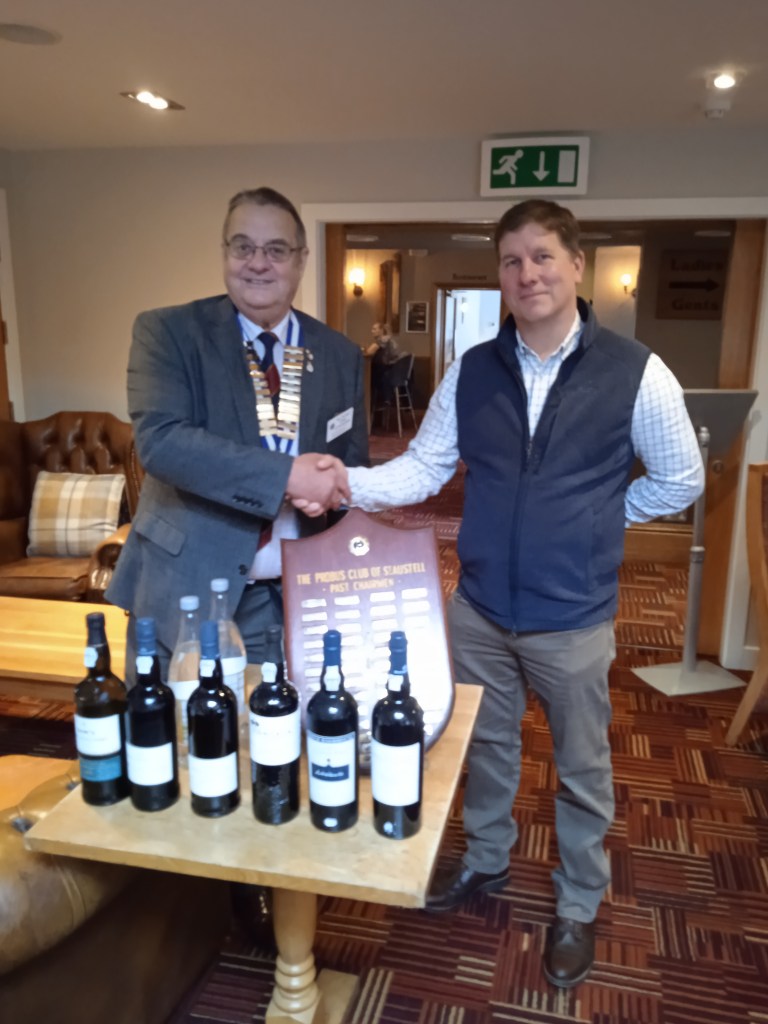
Following the usual excellent lunch, some thirty members of the Probus Club of St. Austell listened to a talk by Nigel Ede from “Experience Wine” Lostwithiel entitled “Turn to Port”.
All port originates from the designated Douro region of Portugal. It first came to prominence when England’s fallouts with France precluded imports of French wines. Relationships with Portugal going back to a treaty of 1373 it was a natural move.
Port wine is fortified by the addition of a natural grape spirit known as aguadente to stop the fermentation, leaving some sugar and boosting the alcohol content.
Port is largely shipped from the riverside port of Oporto from which it derives its name.
The long association with the UK, particularly England and Scotland, commenced from 1670 with a number of still well-known family brands such as Taylor’s, Graham’s and Cockburn.
Nigel explained that white port is made from white grapes and made in a variety of styles with some making a very acceptable alternative to gin in cocktails with those of greater age just drunk chilled. Ruby and vintage red ports are aged in casks and tawney is aged in casks giving it a long life starting red and turning brown.
Members expressed their appreciation of a most interesting talk supported by small tastes of white and tawney ports.
Wednesday 6th September 2023
The speaker at the club’s September lunch was Kathryn Jones from The St. Austell Old Cornwall Society. Kathryn spoke about the St. Austell Town Museum and, particularly, its featuring of the Sawle family.
The museum is housed in the old cells in the Market House manned by volunteers from The Society opening six days a week from Easter to October.
The Sawle family originally thought to originate from Devon was well connected. Nicholas Sawle was married to Alice Rashleigh of Fowey living at Penrice House which was rebuilt in 1596.
Nicholas died in 1637 succeeded by eldest son Oliver who became sheriff of Cornwall in 1663. His wife, Jane, was co-heiress of Sir Francis Granville. Oliver died in 1670 and the estate passed to his son Joseph, then to his oldest son John and, on his death in 1715 to the youngest son also Joseph who became an MP dying in 1737 succeeded by only son John aged 13 on whose childless demise the estate passed to his sister Mary who died unmarried in 1803 the estate passing to the descendants of Joseph senior notably Joseph Sawle Graves who took the name and arms of Sawle by royal licence incorporating the name Graves becoming baronet in 1836.
In 1865 the estate passed to Charles Graves Sawle baronet, JP, MP and eventually to Mrs. Cobold-Sawle who left Penrice House to establish a rest home for the elderly.
A question time followed Kathryn’s talk where a number of Club members were able to demonstrate their knowledge of the subject.
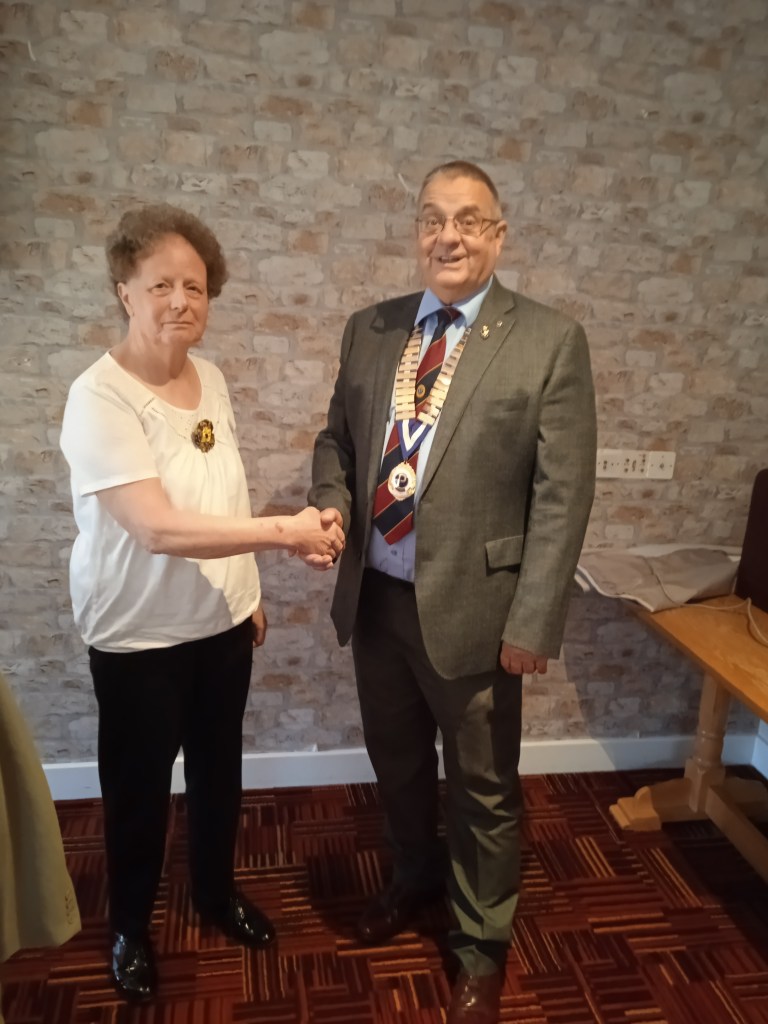
Wednesday 5th July 2023
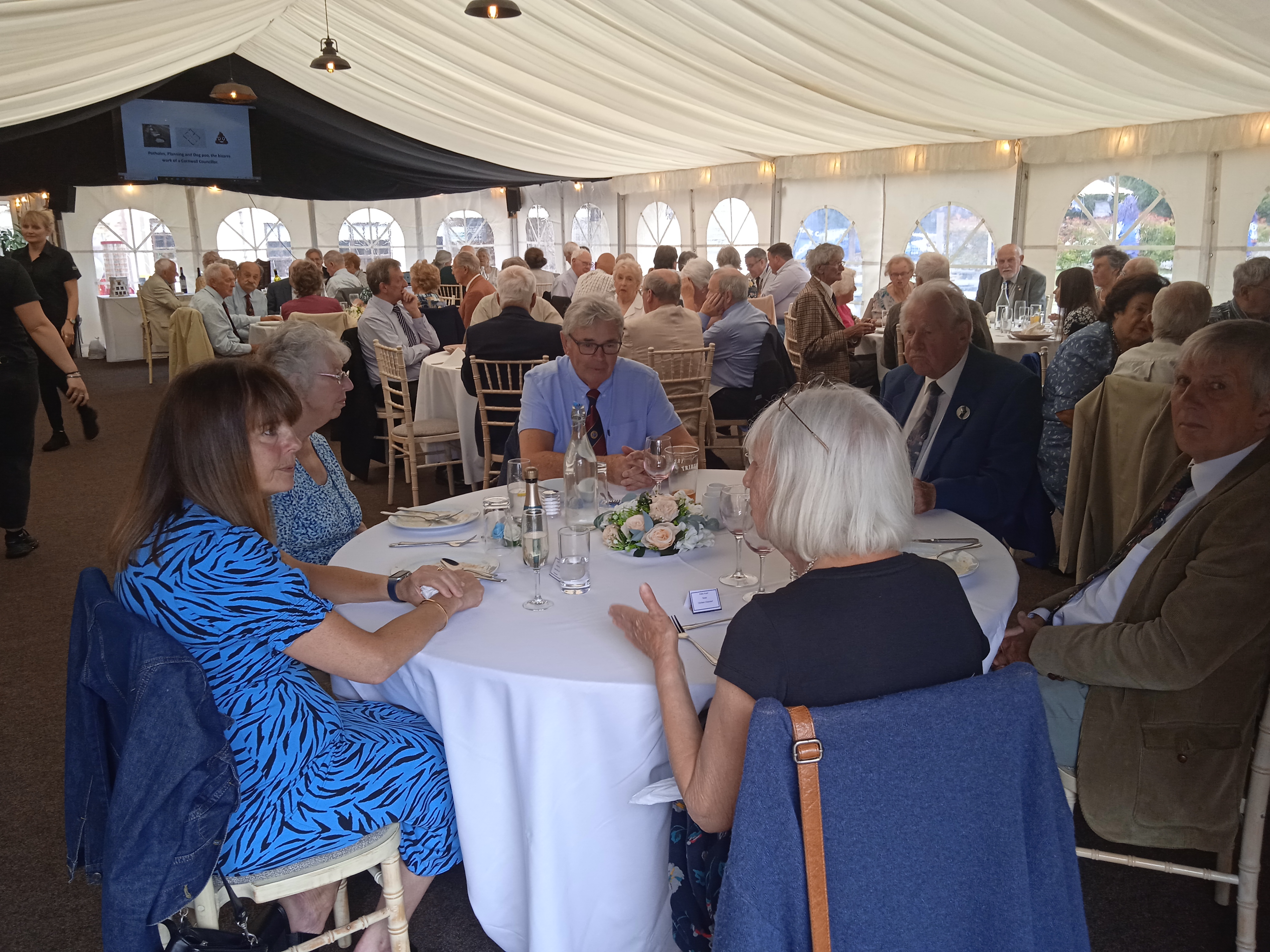
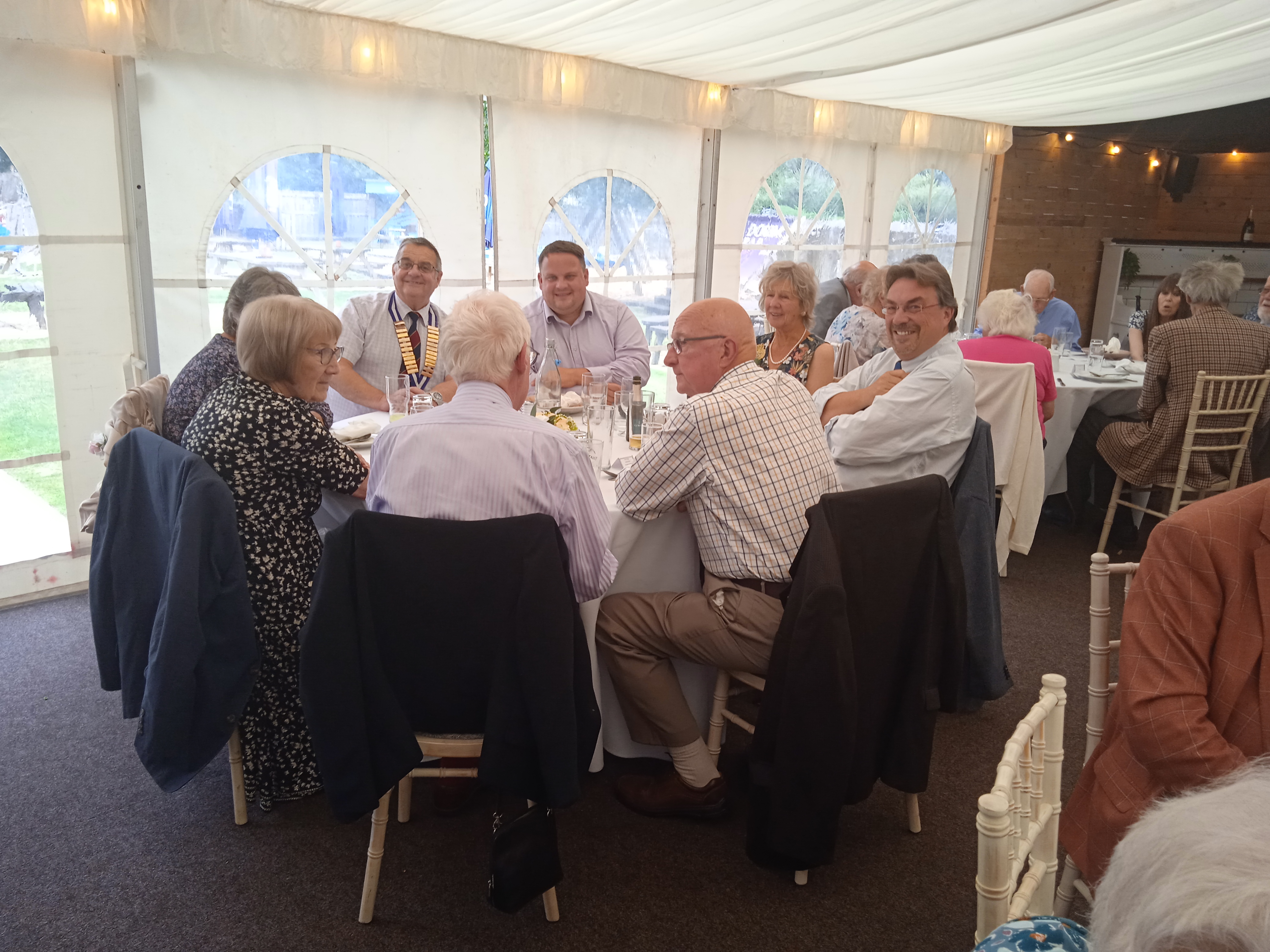
On Wednesday 5th July The Probus Club of St Austell held its annual ladies’ lunch in The Britannia Inn marquee with almost sixty attending.
Guest speaker was Cornwall Councillor for Mevagissey, James Mustoe talking on his life in local politics. He entitled his talk “Potholes, Planning and Dog Poo” but promised, after an enjoyable lunch, not to major on the last of these.
After an initial failed effort in 2013 James was elected in a November 2014 byelection at age 30 by far the youngest councillor. He still claims to be the youngster the average age being some 67.
Probably his least favourite but most time-consuming responsibility is planning although he did get involved in the Mevagissey Parish Council’s decision to rename a pathway in a park as Hitler’s Walk in memory of a somewhat dictatorial councillor. The decision attracted considerable national attention including the Jewish community and, in the end, was rescinded.
James claims considerable success in dealing with pothole problems mainly through publicity and pressurising Cormac often with humour including publishing on social media doctored pictures of road-mending robots with cautions about their possible ill-intentions.
James is actively involved with rubbish clearance and participates in litter picking including, with fellow councillor Richard Hope Pears, from a boat along the shoreline. On one occasion they discovered the remains of a giant leather-backed turtle. James also discovered a “Welcome to Radstock” sign missing from some 150 miles away and arranged for its repatriation.
Chairman Mark Bardsley thanked James for a most interesting presentation.
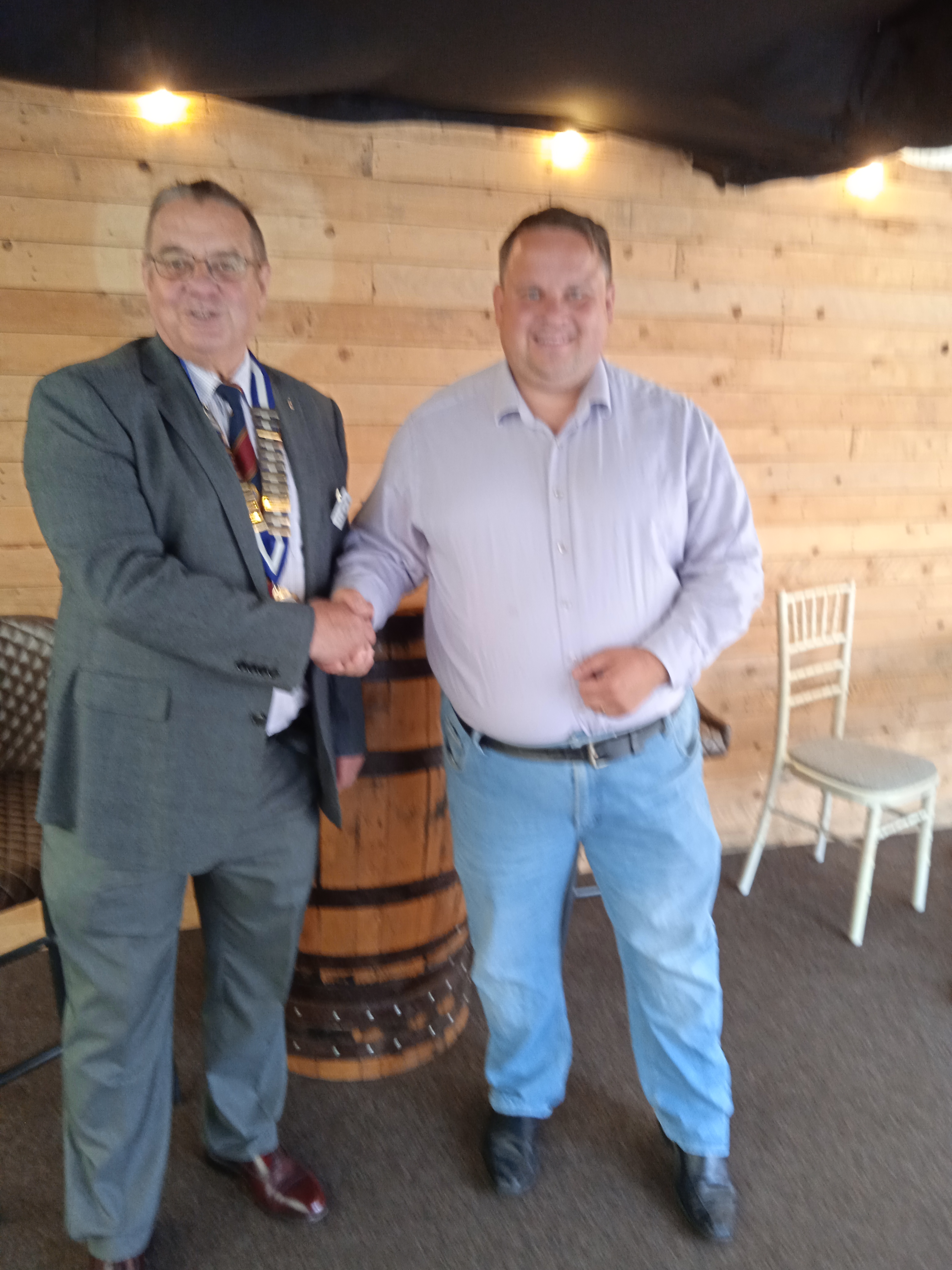
Wednesday 7th June 2023
After the usual excellent lunch members enjoyed a talk with videos by Hayle historian Trevor Smitheram about local hero Rick Rescorla. Rick is best known for his bravery in rescuing over 2700 people by evacuating Morgan Stanley staff in the terrorist attack on the twin towers at The World Trade Centre in New York on 11th September 2001 before returning to the south tower and dying when it collapsed.
Rick was Vice President for Security at Morgan Stanley a position preceded by a notable career. Born in Hayle in May 1939 he was influenced by the USA soldiers based in the town. In 1957 he volunteered to join the British army as a paratrooper serving in an intelligence unit in Cyprus until 1960. Following his short service commission, he joined the Northern Rhodesia Police as an inspector on a three-year contract then returning to UK to join the Metropolitan Police but, unable to settle, emigrated to USA where, after training, he was assigned to 7th Cavalry Regiment as a platoon leader.
Rick was despatched to Vietnam where he saw intense action under the command of Lt. Colonel Hal Moore particularly in the 1965 Battle of la Drang. He left active service in 1967 but remained on the reserve retiring in 1990 with the rank of Colonel. In 2001 he was inducted into the Infantry Officer Candidate School Hall of Fame.
After gaining degrees in English at The University of Oklahoma, he taught criminal justice at The University of South Carolina before moving into jobs in corporate security conducting security reviews including at The World Trade Centre where, his recommendations having been rejected, a terrorist attack took place in 1993. Rick then implemented strict fire and evacuation drills for Morgan Stanley staff.
Trevor Smitheram has been instrumental in elevating the remembrance of Rick Rescorla in Hayle with a named walk, memorial and plaques. Amongst many other tributes Rick was awarded The White Cross of Cornwall, had a train named after him and was honoured with The Presidential Citizen’s Medal.
Chairman Mark Bardsley thanked Trevor for a most informative talk and presented him with a donation to St Julia’s Hospice.
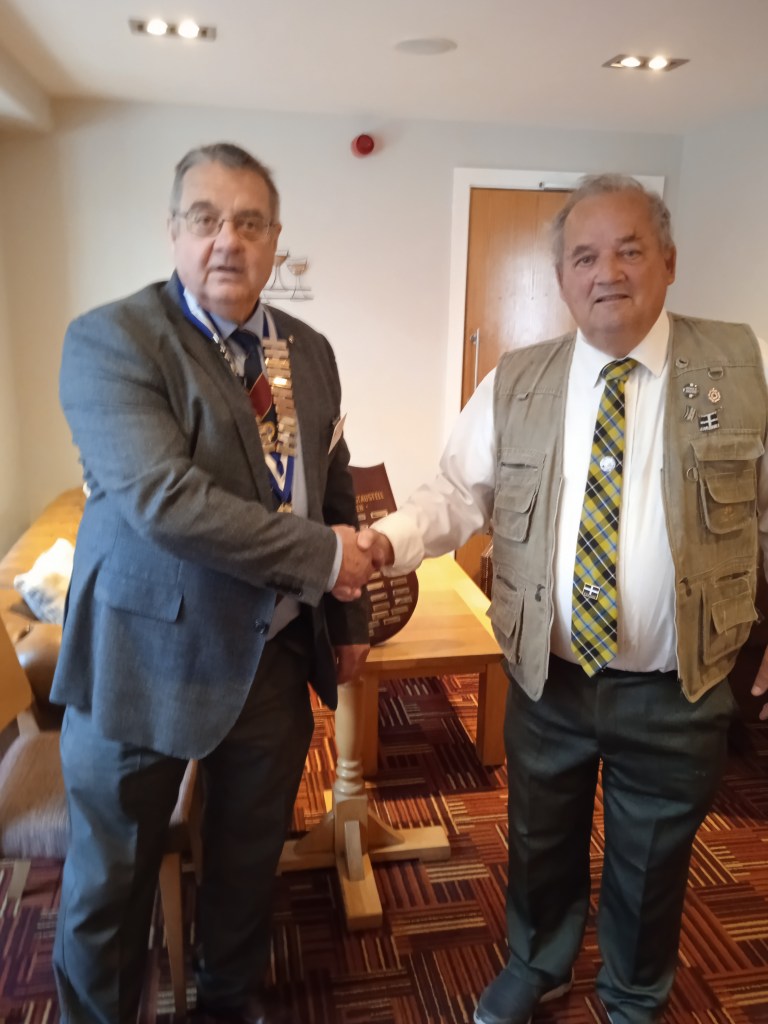
Wednesday 3rd May 2023
Over 30 members of the Probus Club of St Austell gathered at The Britannia Hotel for lunch on 3rd May followed by a talk by retired Detective Chief Inspector Steve de Burgh on the Background to the Millennium Dome Diamond Heist.
Steve was a DCI in the Met. Flying Squad when, on 7th November 2000, a JCB crashed through the Millennium Dome to the room holding the De Beers millennium diamond valued at some £250 million. The robbers were met and arrested by 20 armed SO19 police who emerged from behind a specially erected wall.
The main part of the story revolves around how the police were able to execute the arrest. On 11th February 2000 an attempt was made to steal cash from a Securicor van in Nine Elms. A specially adapted lorry apparently carrying discarded Christmas trees but, in reality, equipped with a massive spike and weighed down with concrete was intended to batter through the security vehicle. It was parked blocking in a Ford Fiesta owned by the manager of an adjacent site who, unable to move his car, removed the lorry’s keys from its ignition. When the Securicor van emerged it was attacked and immobilised but the robber charged with moving the lorry was thwarted. Lorries had been parked across both ends of the road to block police vehicles. The robbers halted operations and fled in a high-speed rib towards Chelsea. CCTV coverage provided information on rehearsals for the robbery including identification of the rib.
On 7th July a not dissimilar armed robbery was attempted in Medway but spoiled by arrival of police. The thieves escaped in a boat on the River Medway. A connection
with a local farm was established and kept under surveillance with suspects identified and observed. Members of the gang were seen paying particular attention to the Millennium Dome and arrangements put in place including substitution of the Millennium Diamond with a fake.
The gang made failed attempts at the robbery foiled by the JCB not starting, traffic jams and the boat not starting.
So, that is a brief summary of Steve’s much more detailed talk on the events leading up to 7th November 2000 which resulted in seven arrests.
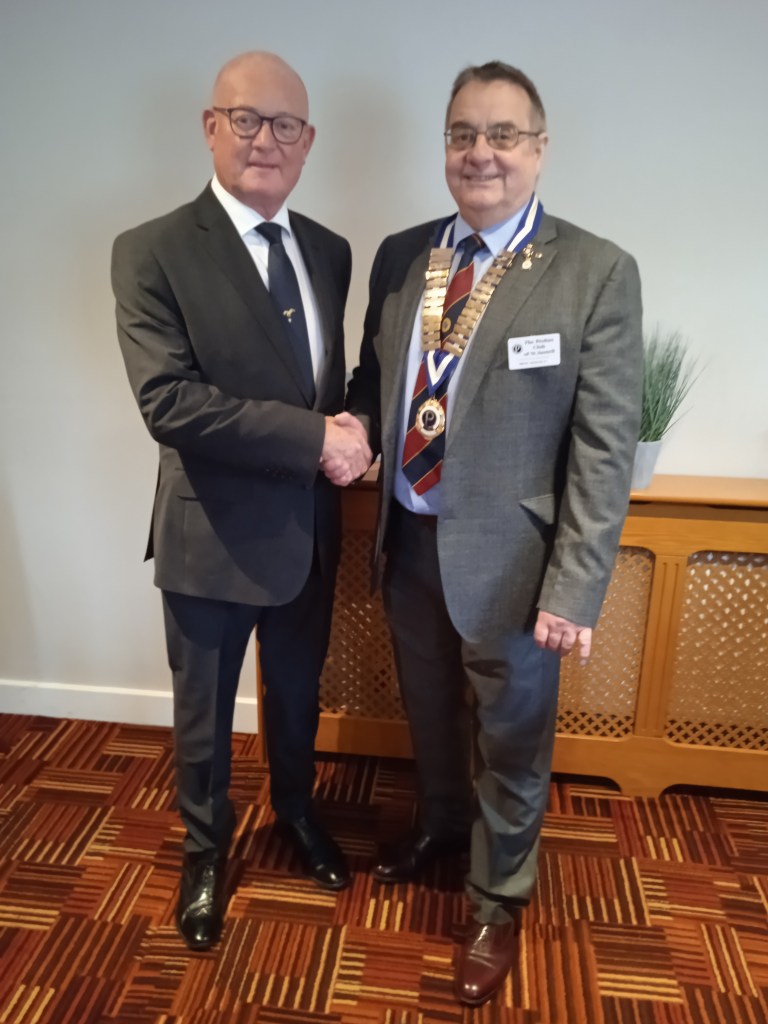
Wednesday 5th April 2023
On 5th April 2023 The Probus Club of St Austell continued to celebrate a diversity in after lunch speakers’ subjects.
This time it welcomed Mick Stevens talking about War Graves of Cornwall. Mick volunteers for the Commonwealth War Graves’ Commission. His contribution is best summed up in the citation which appears with a 2022 CWGC award.
“When the Commonwealth War Graves Commission established the Eyes On Hands On project to help care for military graves across the United Kingdom, Mick Stevens was one of the very first to volunteer in West Cornwall. He has meticulously surveyed all of the war graves in the Falmouth area, where he has added much detail to the existing CWGC records to ensure that commemorations are accurate, whilst also devoting much personal time to continually inspecting graves and cleaning them where necessary.
In the wider context of the project, he has leaned heavily into the West Cornwall Team’s group activities, where his historical knowledge and passion for preserving the memory of our war dead has been an example for all other volunteers.”
Mick explained how the commemoration of fallen troops had evolved. 200 years ago they were buried without ceremony, the dead being identified only by a roll call. The privileged might be recognised by an individual plaque and the remainder by a regimental memorial. No system for recording existed until 1915 when an organisation was created to record those who had fallen behind the enemy front line. Bodies were not repatriated. Only those who had fallen within the dates of the world wars qualify for a headstone maintained by the CWGC others get a memorial outside of its care remit.
There are 290 plots in Cornwall holding 2000 war dead. Since public outcry at the TV filming of The Falklands War, bodies have been repatriated.
Mick volunteers to look after ten graveyards including 31 registered war graves in St. Austell.
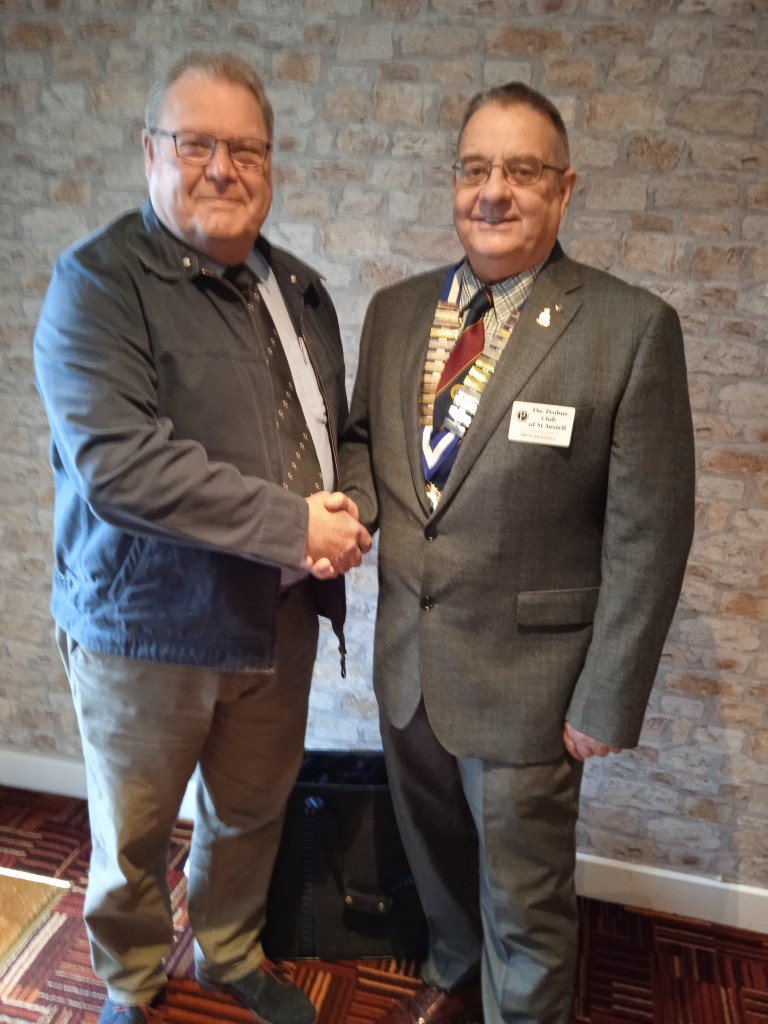
Wednesday 1st March 2023
Another excellent and sociable lunch on 1st. March 2023 at the Britannia Inn was followed by a long-awaited talk by Tim Shaw entitled “3 Generations of TT and still alive”. Tim had been due to give a talk on two previous occasions thwarted by, amongst other things Covid.
Tim was assisted by his wife Helen in charge of video technology.
Tim is the last of three generations to attempt the Isle of Man TT (Tourist Trophy). He showed a gripping video of the race illustrating the high speeds and, regrettably, spectacular spills. The event takes place between the last week in May and the first in June. The course covers 37 miles with 219 corners and 55 manhole covers. Since its introduction in 1907 when the average speed was 37mph there have been 265 fatalities.
The first of the Shaws to compete was Uncle William on a 2.75 hp Twin Douglas in 1921 when the average speed had increased to 54 mph. He was followed by Tim’s father, Major Norman Shaw, who, whilst commissioned in the Royal Signals, found ample opportunity to indulge his love of motor cycling including a 2000-mile trip in 8 days from Kathmandu. In 1959 Norman gathered a support group from his unit to enter his 500 Manx Norton in the TT. Unfortunately, he crashed badly.
Tim, not having previously been attracted to motor cycling, was introduced to it by his father with a surprise entry into a race at Brands Hatch. He quickly became enthused and, whilst on business in USA, studied the TT course on Play Station and managed to gain an entry against stiff competition. He was well satisfied with coming 23rd out of 110 on his Grande Prix Honda which required virtually a daily engine change. Tim’s last attempt was in 2010 on a Suzuki which he now keeps in his house.
Tim rounded off by stating the current average speed of 135 mph and by quoting Stirling Moss “To achieve anything in this game you must be prepared to dabble on the brink of disaster”.

Wednesday 1st February 2023.
After the usual excellent meal at the Britannia Inn, members of the Club were entertained with a talk by Wing Commander Colin Hamilton RAF Retd.
After graduating in Mechanical Engineering and Mathematics, Colin was commissioned in the RAF in which he served for 35 years. He held a number of appointments but concentrated in his talk on his time as Officer Commanding an engineering squadron based at Binbrook in Lincolnshire aged only 33 and responsible for 300 men. The aircraft being operated was the English Electric Lightning interceptor, the first and only UK independent and truly supersonic aircraft to enter service. It presented many challenges including doubts about the safety of supersonic flight and whether missiles would supersede manned aircraft.
Design innovations included a 60 degree wing sweep, airborne radar, an integrated weapon system and a datalink with ground stations capable of vectoring the aircraft to intercepts. The design minimised frontal area to achieve maximum speed with two central engines one above the other around which were located controls, pipework and fuel systems and behind which were reheat pipes. A major problem was that the temperatures in the engine bays exceeded those for spontaneous combustion of fuel, oil and hydraulic fluids resulting in frequent uncontained fires and loss of aircraft.
Primary weapons comprised 2 Firestreak and 2 Red Top missiles augmented on the Mk 6 by 2 x 30mm Aden cannons.
The last RAF Lightning flight was on 30th June 1988 by which time Colin had joined the Ordnance Board in London. Three Lightnings were operated by a private company, Thunder City, in South Africa one crashing during a display with loss of aircraft and pilot. Thunder City closed in 2016.
Colin’s last RAF appointment was as Head of Aircraft and Weapon Testing and Evaluation at Boscombe Down. After retirement he did over 9 years as a consultant mainly advising MOD on future aircraft and weapons’ programmes.
Member Reg Pears thanked Colin for his fascinating talk and Chairman Mark Bardsley presented him with a donation to The Royal British Legion.

Wednesday 4th January 2023
Undeterred by Christmas and New Year feasting, members enjoyed a hearty lunch and listened to a most informative talk by Ian Penhaligon of Age UK Cornwall.
The aim of Age UK is to support those who live independently to live well. It is an independent charity which derives its income from donations and from paid commissioning of services for The Council and NHS. Services are predominantly provided by trained volunteers and include gardening and chores. A chargeable transport service is available using electric vehicles with some 1,000 journeys a year.
A hospital to home service provides counselling on a patient’s needs for a return home followed by practical assistance for six to eight weeks following discharge.
Age UK works closely with other charities and support groups and, through its Community Gateway, can signpost the most appropriate sources of assistance. Various initiatives to encourage socialisation include a digital café. Particularly in Cornwall with a substantial older population, residents are disadvantaged without basic IT skills. A fairly recent innovation is embedding social prescribers into GP practices who support patients with social needs.
Ian stressed that no one should suffer in silence because help is always available.
Graham Bulkeley thanked Ian for his insight into Age UK and giving members a much clearer appreciation of its work. Vice Chairman Gary Truscott handed Ian a cheque.

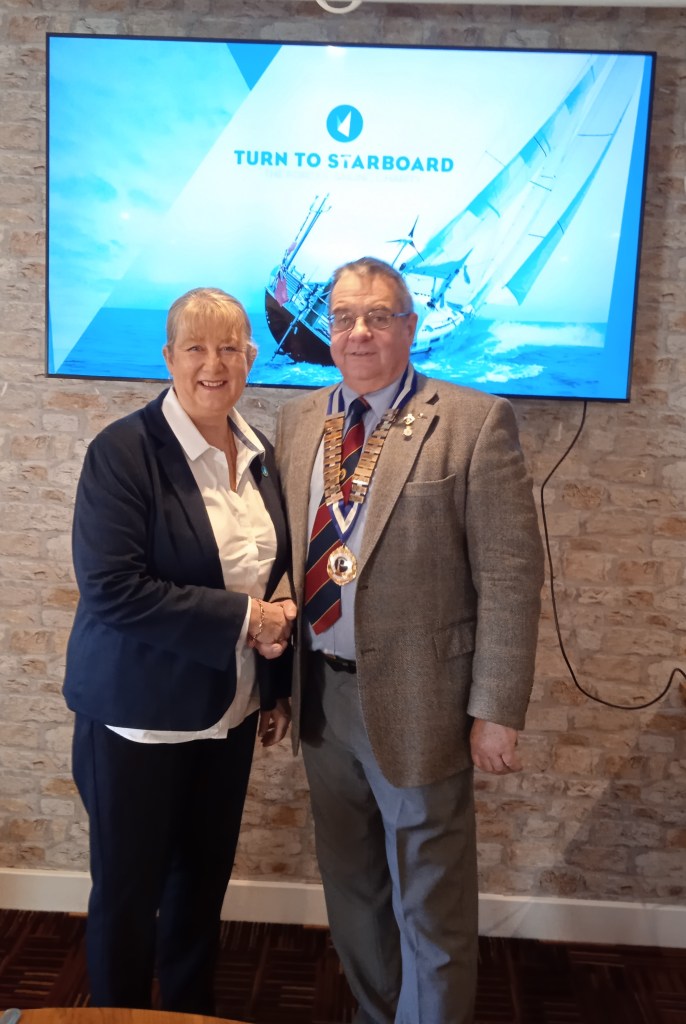
Wednesday 7th December 2022
Following an excellent pre-Christmas lunch, members were entertained by a most informative talk by Helen Jane Operations Manager of Turn to Starboard.
Turn to Starboard is a charity based in Falmouth which provides sailing experience to military veterans helping them to make good choices. Its focus is on resettlement, reintegration and reinforcing a sense of value and belonging.
Its flagship, a tall ship Spirit of Falmouth, is supported by two smaller vessels. Participants’ activities range from developing sailing and social skills through to achieving qualifications right up to yacht master.
Having had to cease operations during the Covid shutdown, the operation is now fully functional and viable supported by a number of forces charities and income from private charters.
Shaun Pascoe founded the charity following his medical discharge from the RAF after service as a squadron leader in Afghanistan. He is supported by a small team including four paid skippers and volunteers.
Chairman Mark Bardsley thanked Helen on behalf of members and presented her with a donation to Turn to Starboard.
Wednesday 2nd November 2022
The Probus Club of St. Austell held its 51st Annual General Meeting at The Britannia Inn on 2nd November 2022.
After approving the minutes of the 50th Annual Meeting, officers presented their reports. Amongst items covered were the success of the delayed 50th Anniversary celebration in July, the high standard of speakers and the excellent catering provided by The Britannia Inn. The Treasurer reported a healthy financial position albeit a little depleted following the Anniversary lunch and a slight fall off in membership.
It was reported that Mark Bardsley was to be reappointed as Chairman with Gary Truscott as Vice Chairman in addition to his duties as Treasurer. Other officers appointed by the meeting were Hon. Treasurer Gary Truscott, Hon. Secretary John Dearing, Lunch Secretary Hugh Walker, Membership Secretary Mark Bardsley, Press Secretary Mike Hackney, Raffle Secretary Geoff Burt with George Miller and Phil Simpson as additional committee members. Jonathan Church whilst standing down from the committee, retains his duties as Almoner. The meeting recorded its appreciation of Jonathan Church and Alan Grigg who had served the Committee well before now retiring.

Gary Truscott welcomed as Vice Chairman
Wednesday 5th October 2022
After enjoying an excellent lunch at the Britannia Inn, members thought that they would sit back to a talk by Jay Dorman from Canoe Cornwall. However, Jay had other thoughts and got all on their feet for a standing ovation comprising one pose with arms outstretched and one with hands together. Not surprisingly all fell for it.
Canoe Cornwall offers a range of activities including adventure camps at its Pill Farm summer camp, bushcraft, archery, canoeing and paintball. Guided kayak tours take place out of Mevagissey and there are canoe trips on The Fal.
Jay had been a paddle coach and white rafter and had worked with Ray Mears and Bear Grills and had been involved with some TV work.
He explained that canoeing is something to be enjoyed by anyone and recommended that anyone interested join a club. Canoes and kayaks (he explained the difference) range from very affordable to very expensive.
Chairman Mark Bardsley thanked Jay on behalf of members and presented him with a donation to his chosen charity.


Wednesday 7th September 2022
The Probus Club of St Austell met at its normal venue, The Britannia Inn, on 7th September for an excellent lunch after which thirty-five members were treated to a fascinating insight into beekeeping by Colin Rees from the Roseland Beekeeping Group.
Colin explained the main differences between honeybees (apis mellifore), bumble bees, solitary bees and wasps.
Honeybees are non-aggressive, except when they or their colony is threatened, live all year round and store food for winter. They are the first insects to emerge in spring to pollinate. In 1851 one Lorenzo Langstroth identified that in nests the honey carrying cones were all the same distance apart and from this he developed the forerunner of the removable frame hive. Honeybees eat nectar and pollen from which honey is produced.
A colony comprises the queen, 50 to 80 thousand female workers and hundreds of drones. The queen lays eggs and leaves the colony only to fly up to 5 kilometers to mate meeting up with congregations of drones who pursue her and, after mating, die.
The queen may make 15 to 20 mating sorties.
Colin stressed that swarming of colonies is a natural means of colony reproduction and, whilst possible alarming to see, does not represent a threat since they have filled with food before setting off.
Pollination, led by honeybees, is responsible for the quality of most of our foods. Einstein maintained that should the honeybee die out mankind would survive for only four years.
Chairman Mark Bardsley thanked Colin on behalf of members and presented him with a donation to his chosen charity.

Wednesday 3rd August 2022
Our August Meeting was held at the Britannia Inn, St Austell and after a very nice Lunch our Chairman, Mr Mark Bardsley, introduced Mr John Shaw, who spoke to us about his time in Cambodia. At the time John was a serving Warrant Officer in the Royal Navy during a career of some thirty-five years in the Senior Service. He was there as a team leader within the R.N. Special Forces, but there were many Nations involved, and a U.N presence as well.
This was at a time when the Country was recovering from the Leadership of Cambodian Revolutionary Dictator Pol Pot. There was a lot to do getting the Country back to some sort of normality including General and Police Elections, all in a time of much Corruption, Stealing, Gun Running and Land Mines everywhere that had to be dealt with as soon as possible. Cambodia was the most mined Country in the World.
The Country and the World remembers the Killing Fields and the hundreds of thousands of people who lost their lives in such terrible atrocities.
John spoke of these and told us of the meticulous detail that the Pol Pot regime kept of this genocide.
John was awarded the M.B.E. for his Work and Leadership over many years.
Club Chairman Mark Bardsley thanked John for his talk following an interesting question time and presented John with a cheque for £50 for his chosen charity which was the Helston & Lizard Food Bank.
Our raffle raised £59 for Club Funds.
The Meeting was closed as normal with a toast to all Probus Clubs & Members.

GOLDEN ANNIVERSARY CELEBRATION LUNCH
HELD AT THE BRITANNIA INN ON JULY 6TH 2022
Our chairman Mr Mark Bardsley welcomed sixty people (Members & Guests Wives & Partners) to the lunch.
He then read the Grace, before we all enjoyed a lovely lunch.
All the ladies were presented with a white silk flower, and there was a floral centre piece on every table.
The principal speaker for the day was our own secretary Mr John Dearing. He explained that the Probus Club Movement was started by the Rotary Club as somewhere for their retired members to visit.
This all began in 1965 and gradually, it was taken on by a lot of rotary clubs.
The St. Austell Probus Club was formed in 1970, primarily with the help of Rotarian Mr John Morgan and his colleagues.
The first meeting and lunch was held in The Clifden Hotel St. Austell during July 1970, twenty four members attended. The three course lunch cost Fourteen Shillings. Gradually the membership increased and now there are up to sixty members.
This Golden Anniversary event was due to be held in 2020, but the Covid Pandemic meant it had to be delayed until now.
At this time in 1970 Edward Heath was the Prime Minister, Concorde flew for the first time, A new Ford Cortina cost £880 and Petrol was equivalent to 33 pence per gallon.
John continued by thanking all the members and Committee who had worked hard keeping everyone informed and cared for during the Lockdown when the club was unable to meet.
He asked everyone to remember departed members and those who were unable to to attend this Celebration Lunch.
Today, there are some Two Thousand Probus Clubs throughout the world.
There was a memory book circulating containing many interesting writings and photographs covering the history of the club.
A speaker is invited each month to give a talk on a wide range of topics of their own choice, and a donation of £50 is then given to them for their own chosen charity.
The main guests at this celebratory lunch was The Mayor of St Austell Councillor Andrea Lanxon who was accompanied by her deputy, Councillor Crystal Pearce.
Councillor Lanxon replied to the welcome, she thanked everyone for the fine lunch and wished The St Austell Probus Club well for the future.
Chairman Mark Bardsley gave thanks to all the committee who had worked very hard for such a special day.
This was followed by a raffle which in turn was followed by an auction of all the table floral centre pieces, Club Treasurer Gary Truscott acting as the Auctioneer. The total raised was £90 which was given to The Mayor for her chosen charity St Johns Ambulance.
The afternoon finished as always with The Chairman giving The Probus Toast
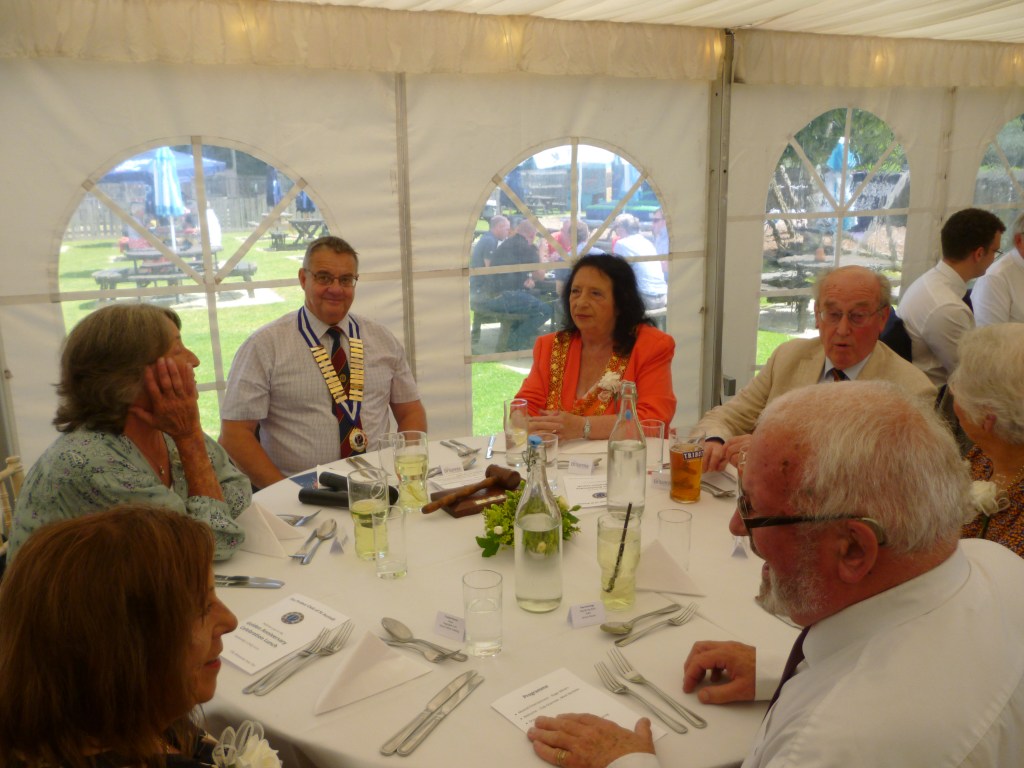
Wednesday 1st June 2022
The speaker at our June lunch at The Britannia was Tim Boulton, Director of The Cornwall Youth Orchestra.
CYO is celebrating its 52nd anniversary since its founding by James Sargent. Like our club marking its gold jubilee was thwarted by covid.
Members of the orchestra come together for one full day a month travelling from all points in Cornwall and participate in a three-day residential at Easter.
Tim played a couple of videos demonstrating how much of their repertoire is based upon musical interpretation of storytelling.
Encouraging us to stay awake, Tim led us in clapping under the instruction of his baton. One of three means for a conductor to communicate the others being body and verbal language.
The young musicians are encouraged to take lead roles and achieve their personal best.
Performances have included Music for Schools Proms at The Royal Albert Hall, MFY National Festival at Symphony Hall, Birmingham, and appearances at Hall for Cornwall.
Secretary John Dearing proposed a vote of thanks and Chairman Mark Bardsley presented Tim with a contribution to CYO funds.
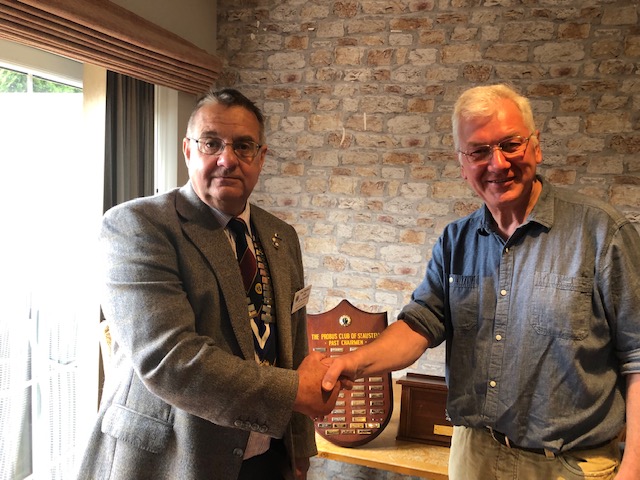
Wednesday 4th May 2022
Today’s speaker Barrie Galley from Cornwall Air Ambulance. He presented an overview of the history of the charity and gave examples of the life saving work the service provides the people of Cornwall. Formed in 1987 it was the first air ambulance to operate in the UK, leading the way for the current 19 now in service across the country. Their work is entirely funded from charitable donations and fundraising events. Chairman Mark Bardsley presented a cheque on behalf of Probus.

Wednesday 2nd March 2022
Our March Meeting was held at the Britannia Inn, St Austell, where Mr Richard Spencer Breeze, who is the founder of the Cornwall Aviation Trust gave us a very interesting talk. There is an Aerospace Museum at the St Mawgan, Newquay airport where they take up in the region of three acres for their aircraft displays. This is open to the public a full 5 days per week. Their aim is to provide entertainment and education to all ages and they have several aircraft on site which visitors can view onboard in an interactive and hands on manner.
They have some 19 aircraft on site including airliners, fighters and trainers. There is also displays of engines and aircraft parts. Guided Tours are available with a full explanation of all displays. They have a Tornado, BAC111 airliner, a VC10 refueler, an Avro Shackleton, and the cockpit display of a Nimrod aircraft.
With regard to the education element they undertake full Cabin Crew Training and Engineering training both with full qualifications available. This is done in conjunction with Cornwall College.
There are some 50 Volunteers who give their time at the Trust including some who are ex military personnel and are experts in their fields. Historical Aircraft need a large amount of looking after and care as well as maintenance and restoration, which is all undertaken at the Trust.
The Trust receive no money as grants and therefore its only income is through ticket sales and gifts. Currently the Trust is in negotiation with Cornwall Council regarding renewal of its lease to continue being on the site and developing the Trust in future. A vote of thanks was given by our member Mr Reg Pears, who himself was a career R.A.F. Air Crew, and flew on some of the planes mentioned. Our Chairman, Mr Mark Bardsley, also thanked the speaker for his very interesting talk and presented him with a cheque for his chosen cause.
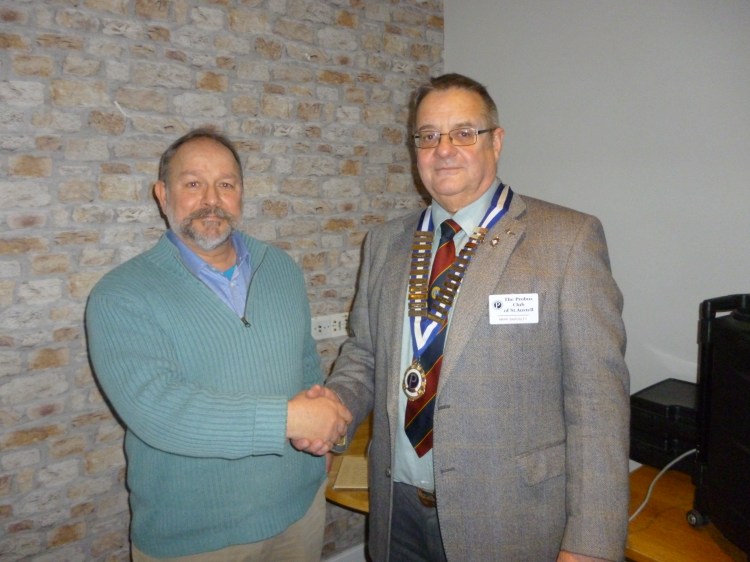
Wednesday 2nd February 2022
Our guest speaker this month was Brendan Hale from Cornwall Blood Bikes, who gave an informative talk about this local volunteer service.
Cornwall Blood Bikes are a team of volunteer members, dedicated to providing a weekday ‘out of hours’ service supporting the NHS. They are not a ‘blue lights’ service, but have formal agreements to deliver essential Human Blood, Pathology Samples, Medication, Medical Equipment, Medical Notes and occasionally Donor Breast Milk to the NHS hospitals and hospices throughout Cornwall and beyond.
Cornwall Blood Bikes (Charity No. 1140165) was founded at an inaugural meeting of seven volunteers held in Pensilva, Cornwall on 27 January 2011 and received ‘Registered Charity Status’ on 2 February 2011, becoming fully operational in July 2012. They are members of the Nationwide Association of Blood Bikes (NABB) whose membership of blood bike groups is countrywide, and they often link up with other regional blood bike services for deliveries farther afield.
Their mission is to relieve sickness and protect health by the provision of transport or urgently needed blood, drugs, human tissues and other medical requirements between hospitals, clinics, laboratories, doctors, or other such places as the trustee’s deem fit.
Their riders deliver and collect from the hospitals and hospices throughout Cornwall and sometimes beyond. The volunteer riders are required to be qualified advanced motorcyclists (IAM, RoSPA or equivalent) and have undergone an assessment of their riding skills as well as bespoke training in relation to sample handling and the procedures required for working with our NHS partners. Volunteers freely give up their time to serve the community, but will almost certainly never meet the patients that they are helping: in turn the patients will probably never know of the existence of the Cornwall Blood Bike service or that it played any part in their recovery.
Blood Bikes have approximately 55 volunteer riders who fulfilled 5,853 trips in 2020, covering nearly 230,000 delivery miles. Riders are provided with the necessary kit (satchels, spill kits, etc) to meet the requirements for carrying goods as specified by our NHS partners whether using one of our liveried Blood Bikes or sometimes their own private motorcycle. Identity Cards are carried by our volunteer members which are worn and visible at all times when on duty.
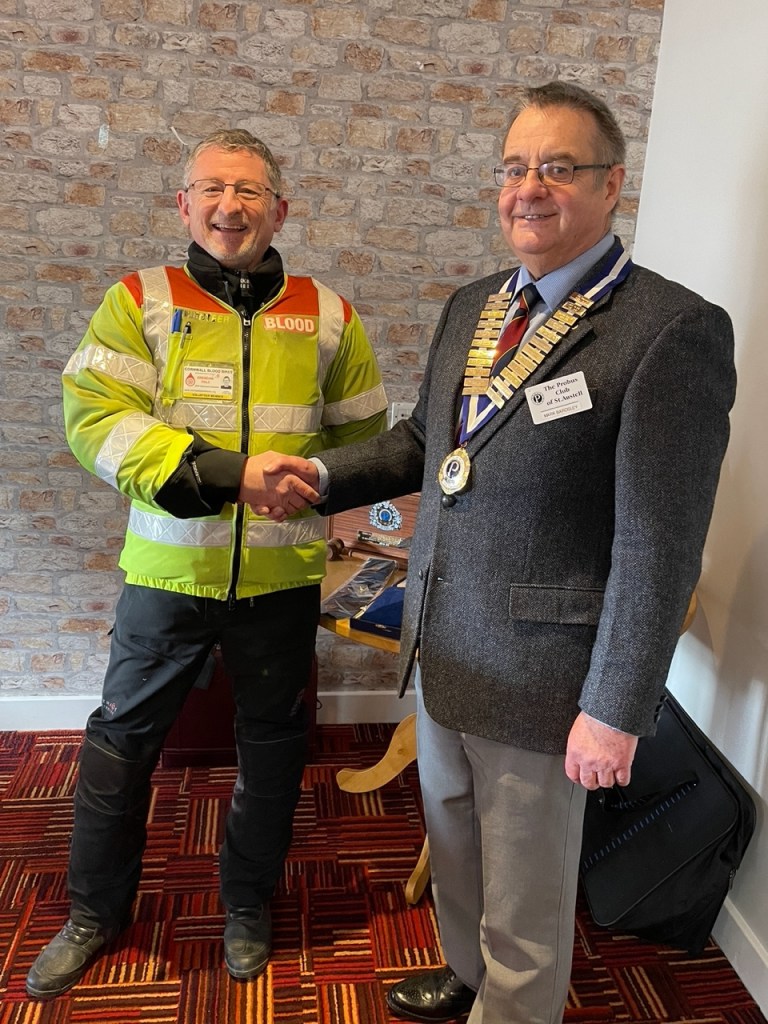
Wednesday 5th January 2022
The Meeting was held at the Britannia Inn for lunch. Our speaker for the day was unable to attend owing to Covid so our Vice Chairman, Mr Mark Bardsley, spoke instead about The Royal British Legion, (R.B.L) Mark is a member of this organisation, now retired, but having spent a career in the Royal Navy.
Mark told us that the R.B.L. was formed in 1921, a few years after the first world war, owing to so many men & families still suffering from the conflict.
A Lancastrian, Lance Bombardier Tom Lister, was the instigator of the movement owing to a government unable to anything to improve the situation of millions of people, so on the 15th May 1921, at 9am at the Cenotaph in London the British Legion was born.
Its purpose is to care for those who have suffered as a result of Service in the British Armed Forces, whether through their own Service or that of an immediate family member.
The two minute silence had already been adopted as a token of remembrance and in 1921 the first Poppy was sold to raise funds for the injured and their families, and thus the Poppy Appeal was born. We recognise so well the Red Poppy that is its emblem.
On the occasion of its 50th anniversary in 1971 by Royal Decree, the Legion became The Royal British Legion that we know so well today. The Poppy Appeal today raises an average in the region of £43million every year, and with other monies being raised, totalling in the region of £150million, much needed funds to support the R.B.L. annually for all the welfare they undertake.
This was originally inspired by a Canadian, Lieutenant Colonel John McCrea, who saw so many Poppies growing in a war torn countryside that he wrote the well known poem, “In Flanders Field”, & then by an Amercan, Miss Moina Michael, where the Poppy was adopted by the American Legion in 1920. it was adopted by the British in 1921.
We thank Mark for standing in at short notice & for such an interesting talk.
 The Probus Club of St. Austell